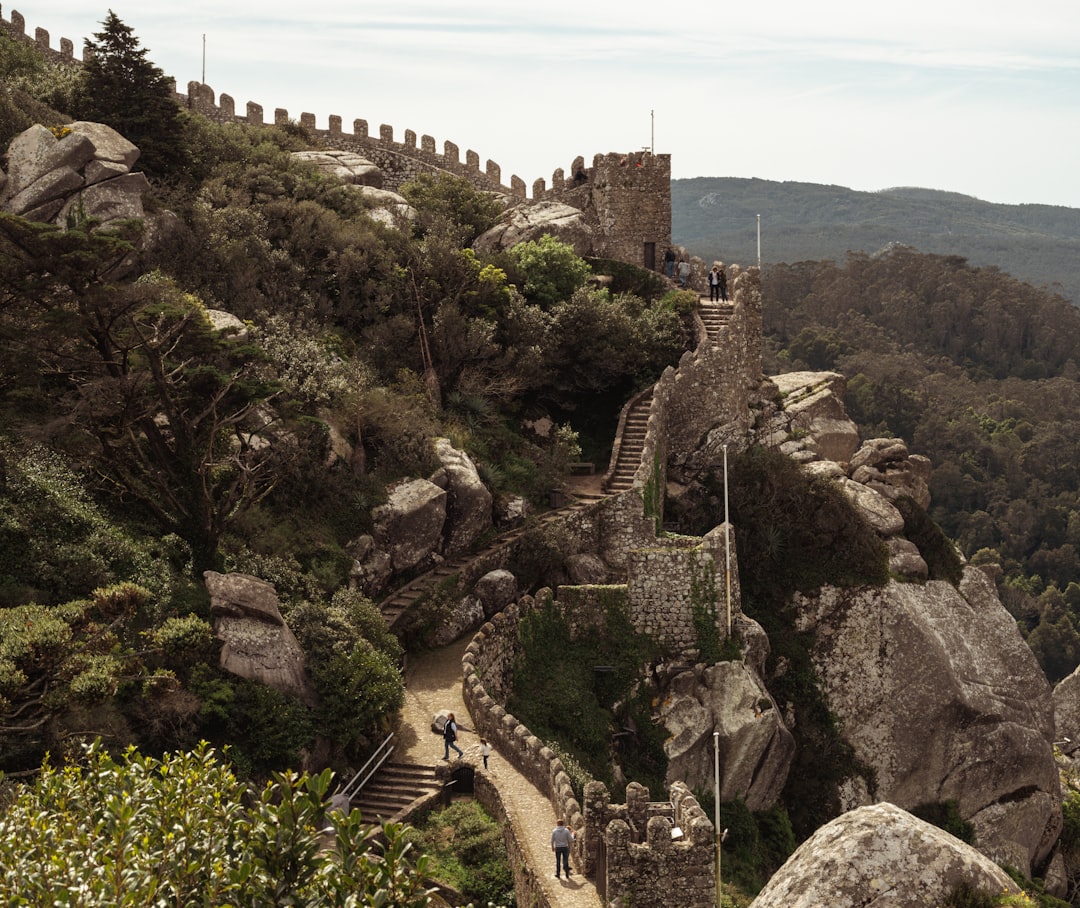

Set in a fairytale landscape, the Moorish Castle of Sintra majestically rises on the hills surrounding this enchanting Portuguese city. Located just 28 km from Lisbon, Sintra is a place where history and nature intertwine, creating a unique atmosphere that attracts visitors from all over the world. The castle, with its ancient walls and towers, tells stories of a fascinating past, while the surrounding panorama captures the heart of anyone who ventures there.
This site, declared a UNESCO World Heritage Site, is not only a symbol of Moorish history in Portugal but also a refuge for those seeking an unparalleled cultural and visual experience. Its strategic location offers breathtaking views of the Sintra mountains and the Atlantic coast, making it an ideal place to explore the natural and architectural beauty of the region.
History and Origins
The Moorish Castle, also known as Castelo dos Mouros, dates back to the time of Moorish domination in Portugal, around the 9th century. Its construction was influenced by the need to defend the area from Christian attacks during the Reconquista. The imposing walls and towers of the castle represent a remarkable example of Moorish military architecture, with a layout that perfectly adapts to the mountainous context. The structure has been expanded and renovated over the centuries but still retains the original charm of a bygone era.
After the Reconquista, which took place in 1249, the castle gradually lost its defensive function, becoming a ruin. However, the site has maintained its historical and cultural significance, attracting the attention of artists and historians during the 19th century when restoration of its structures began. Today, the Moorish Castle represents not only an important testimony of Portuguese history but also a symbol of the resilience and beauty of Moorish culture.
Elements to Observe
When visiting the Moorish Castle, tourists can admire its imposing stone walls that wind along the crests of the hills. The panoramic towers offer spectacular views of the city of Sintra and the surrounding lush vegetation, creating unforgettable photographic opportunities. Visitors can also explore the remains of ancient rooms and be fascinated by the history these walls tell.
Another remarkable element is the path leading to the castle, immersed in an oak and pine forest, which adds a touch of magic to the visit experience. The combination of history, nature, and architecture makes the Moorish Castle a must-see for anyone in Sintra, offering a journey through time that captivates and engages.
Why It Is Interesting Today
Today, the Moorish Castle is not only a historical testimony but also a meeting place for enthusiasts of history, architecture, and nature. Its strategic location makes it an ideal starting point for exploring the Sintra-Cascais Natural Park, which hosts a variety of hiking trails and breathtaking views. Additionally, the castle often hosts cultural events and exhibitions, making it a vibrant center of activity.
Its importance as a tourist attraction has contributed to preserving and enhancing the cultural heritage of Sintra, allowing visitors to appreciate not only the beauty of the castle but also the entire region. The enchanted atmosphere of Sintra, combined with the rich history of the Moorish Castle, continues to attract travelers seeking meaningful and authentic experiences.
Practical Information for Visitors
To visit the Moorish Castle, it is advisable to plan your visit in advance, as the site can be crowded during peak season. Access is facilitated by a network of public transport connecting Sintra to the main surrounding cities. Once there, visitors can enjoy a hike that will take them through scenic paths to the castle entrance.
It is recommended to wear comfortable shoes and bring water and snacks, as the visit may require several hours of exploration. Don't forget to bring a camera to capture the incredible views and architectural details of the castle. For an even deeper discovery of the area, the Secret World app can be a useful guiding tool.