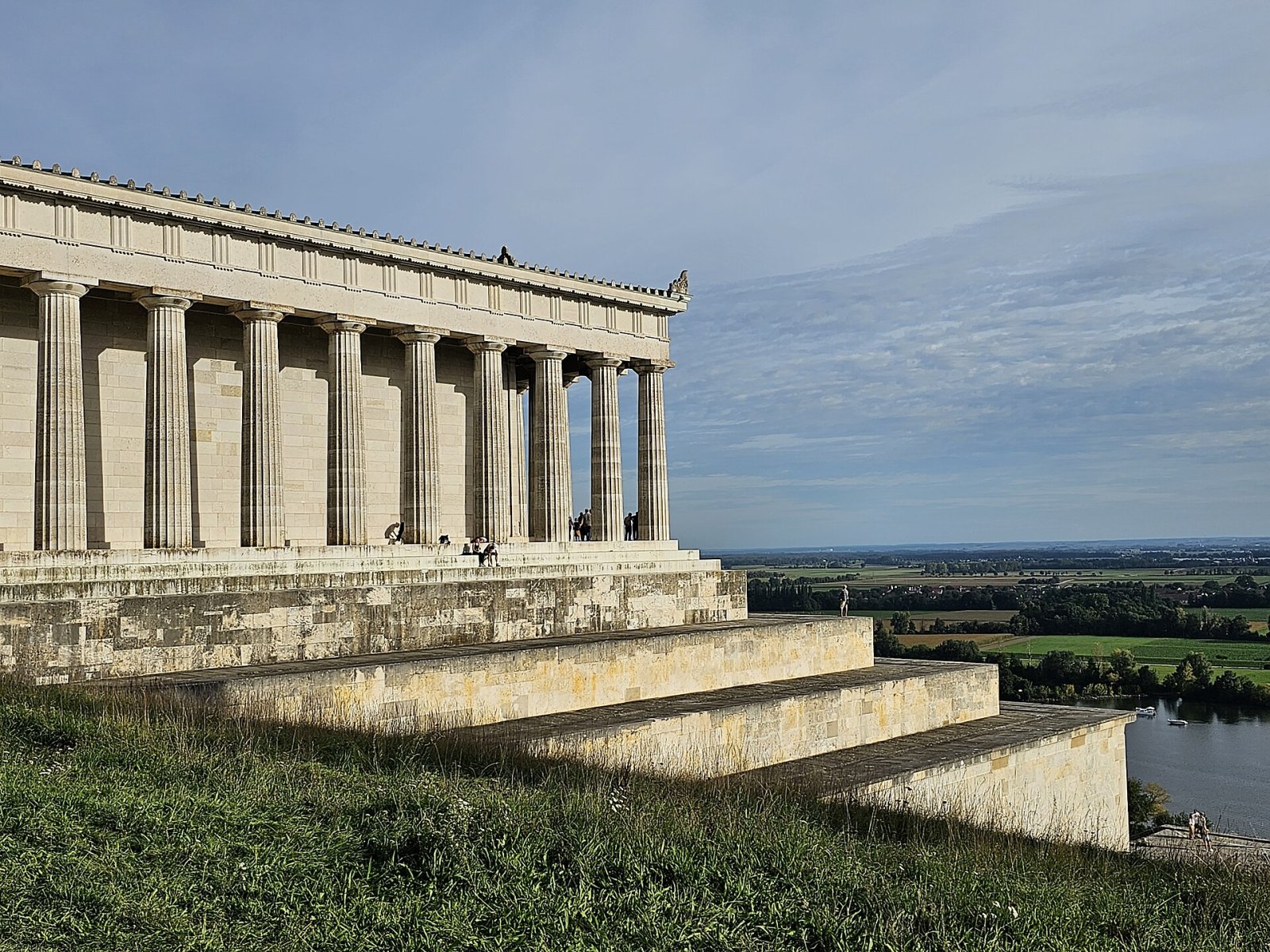

Nestled in the picturesque Bavarian landscape, the Walhalla Temple stands majestically on the banks of the Danube in Donaustauf, Germany. This historical monument, dedicated to the great men of German history, represents a place of great cultural and symbolic importance. Its neoclassical architecture and panoramic location make it a must-see attraction for anyone visiting the region.
The temple was designed by architect Leo von Klenze and inaugurated in 1842, thanks to the initiative of King Ludwig I of Bavaria. The structure is inspired by the Parthenon in Athens and houses busts and commemorative plaques of illustrious figures from German history, from poets to scientists, and national heroes. A visit to Walhalla offers not only an immersion in history but also a unique visual experience, with breathtaking views of the Danube and the surrounding hills.
History and Origins
The construction of the Walhalla Temple began in 1830 and reflects the romantic ideal of the 19th century to celebrate the greatness of the German nation. King Ludwig I wanted to create a monument that could unite the German people through the celebration of their cultural heritage. The choice of the name "Walhalla," which in Norse mythology represents the paradise of fallen warriors, underscores the importance attributed to history and national identity.
The temple was designed to host not only statues of illustrious men but also to serve as a place of reflection and celebration of German culture. Its inauguration was a significant event, attracting visitors and dignitaries from all over Germany, and since then it has become a symbol of national pride and a landmark for cultural tourism.
Elements to Observe
One of the most impressive features of the Walhalla Temple is its façade, adorned with Ionic columns that give it a majestic and imposing appearance. Inside, visitors can admire a large hall that hosts over 130 busts of historical personalities, including Martin Luther, Johann Wolfgang von Goethe, and Ludwig van Beethoven. Each bust is accompanied by a plaque describing their deeds and contributions to German culture.
Moreover, the panorama that can be admired from the temple's terrace is simply spectacular. From the top of the hill, one can observe the Danube River flowing peacefully, surrounded by unspoiled nature. This place is not just a monument but also a meeting point between history and natural beauty, making it an ideal spot for a contemplative walk.
Why It Is Interesting Today
Today, the Walhalla Temple is not only a place of historical interest but also a symbol of unity and culture for contemporary Germany. Its importance is accentuated by cultural events and celebrations that take place regularly, attracting visitors from all over the world. The temple represents a unique opportunity to explore German history and reflect on the cultural heritage of a nation.
In an era where cultural heritage is increasingly valued, Walhalla stands out as an example of how history can be celebrated and preserved. Its architectural beauty and historical significance make it a place of great charm and interest for tourists and scholars alike.
Practical Information for Visitors
To visit the Walhalla Temple, it is advisable to plan your visit in advance, as the site can be crowded during the summer months. Access is facilitated by a network of paths and roads leading to the top of the hill, where the temple is located. Donaustauf can also be reached by public transport, making the visit accessible to everyone.
The site also offers a visitor center where you can obtain further information about the history of the temple and participate in guided tours. Don't forget to bring a camera, as the views offer extraordinary photographic opportunities. For those who desire a more in-depth experience, the Secret World app can provide additional details and tips for exploring this fascinating monument.