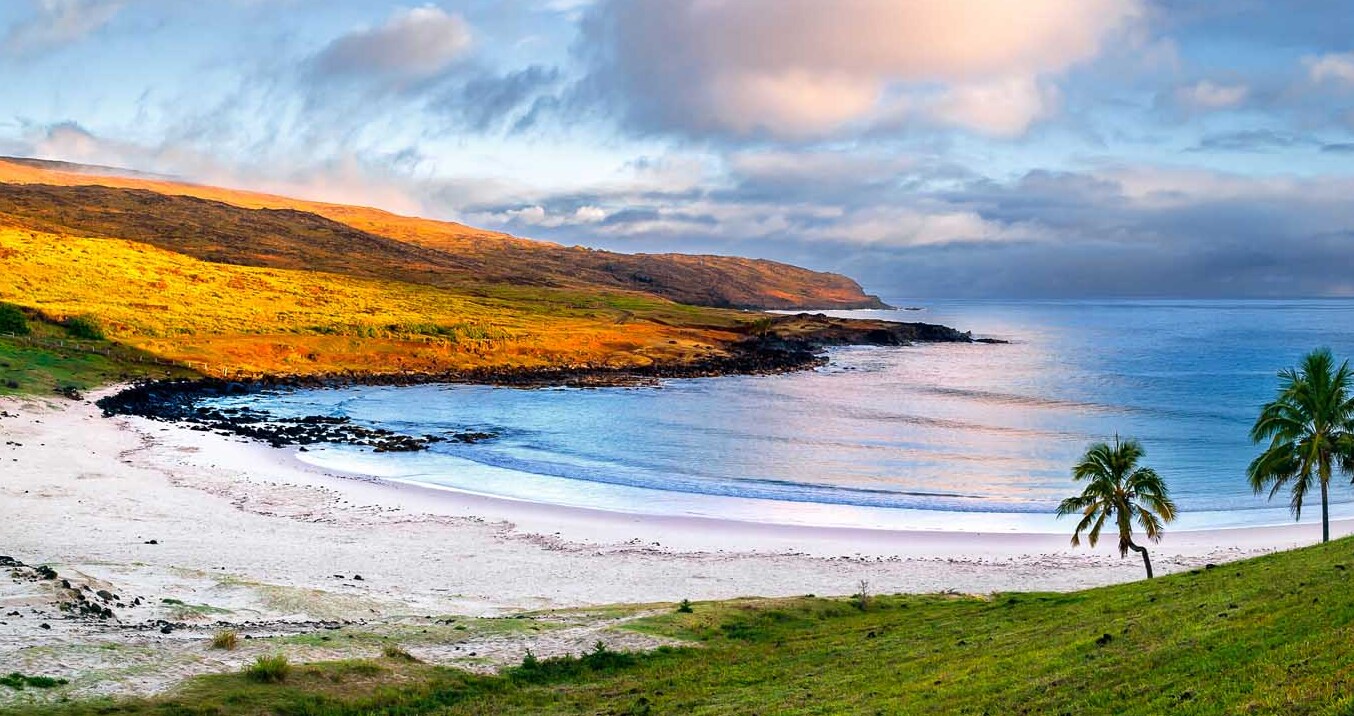

{ "title": "Anakena Beach: Rapa Nui's Sacred Shores in Chile", "description": "Nestled on Easter Island, Anakena Beach is a stunning blend of natural beauty and rich history. Its pale coral sands and calm waters provide a stark contrast to the island's rugged terrain, making it a unique destination for travelers. The beach is not just a picturesque escape; it is steeped in legend and culture.\n\nHistory and Origins \nAnakena Beach is more than just a beautiful coastline; it is a site of profound historical significance. According to legend, it was here that Hotu Matu'a, the legendary founder of Rapa Nui, arrived in the 4th century with his followers. They brought with them the seeds of a new civilization. The area soon transformed into the first settlement on the island, where clans congregated, shared resources, and worshipped their ancestors. Archaeological excavations have revealed remnants of these early communities, including ceremonial platforms called ahu, which served as altars for the Moai.\n\nArt and Architecture \nThe most striking feature of Anakena Beach is the impressive row of Moai statues that line the shore, standing sentinel over the turquoise waters. These lava stone statues, carved between 1400 and 1650 AD, are celebrated for their oversized heads, which represent the high status of the ancestors they commemorate. The craftsmanship speaks volumes about the artistic prowess of the Rapa Nui people. Notably, the Moai at Anakena are unique due to their location and the aesthetic harmony they create against the backdrop of the beach. The ahu here are not just burial sites; they are integral to the spiritual landscape of the island, embodying the connection between the people and their ancestors.\n\nLocal Culture and Traditions \nThe culture of Easter Island is vibrant, characterized by its unique language, music, and dance. The traditional dance, known as Hoko, is performed during festivals and celebrations, showcasing the island’s rich heritage. One of the most significant events is the Tapati Festival, held in February, which celebrates Rapa Nui culture with music, dance, and competitions that honor ancestral practices. Visitors can witness traditional crafts such as tattooing, weaving, and carving, which are still practiced by local artisans today.\n\nGastronomy \nNo visit to Anakena Beach would be complete without savoring the local cuisine. Rapa Nui is known for its fresh seafood, particularly tuna, which is often prepared in a traditional style called “po’e”—a type of pudding made from cooked fruit and served with fish. Another local delicacy is **"
, "description": "Nestled on Easter Island, Anakena Beach is a stunning blend of natural beauty and rich history. Its pale coral sands and calm waters provide a stark contrast to the island's rugged terrain, making it a unique destination for travelers. The beach is not just a picturesque escape; it is steeped in legend and culture.\n\nHistory and Origins \nAnakena Beach is more than just a beautiful coastline; it is a site of profound historical significance. According to legend, it was here that Hotu Matu'a, the legendary founder of Rapa Nui, arrived in the 4th century with his followers. They brought with them the seeds of a new civilization. The area soon transformed into the first settlement on the island, where clans congregated, shared resources, and worshipped their ancestors. Archaeological excavations have revealed remnants of these early communities, including ceremonial platforms called ahu, which served as altars for the Moai.\n\nArt and Architecture \nThe most striking feature of Anakena Beach is the impressive row of Moai statues that line the shore, standing sentinel over the turquoise waters. These lava stone statues, carved between 1400 and 1650 AD, are celebrated for their oversized heads, which represent the high status of the ancestors they commemorate. The craftsmanship speaks volumes about the artistic prowess of the Rapa Nui people. Notably, the Moai at Anakena are unique due to their location and the aesthetic harmony they create against the backdrop of the beach. The ahu here are not just burial sites; they are integral to the spiritual landscape of the island, embodying the connection between the people and their ancestors.\n\nLocal Culture and Traditions \nThe culture of Easter Island is vibrant, characterized by its unique language, music, and dance. The traditional dance, known as Hoko, is performed during festivals and celebrations, showcasing the island’s rich heritage. One of the most significant events is the Tapati Festival, held in February, which celebrates Rapa Nui culture with music, dance, and competitions that honor ancestral practices. Visitors can witness traditional crafts such as tattooing, weaving, and carving, which are still practiced by local artisans today.\n\nGastronomy \nNo visit to Anakena Beach would be complete without savoring the local cuisine. Rapa Nui is known for its fresh seafood, particularly tuna, which is often prepared in a traditional style called “po’e”—a type of pudding made from cooked fruit and served with fish. Another local delicacy is “curanto,” a dish of mixed seafood and vegetables traditionally cooked in an underground oven, showcasing the island's strong connection to the ocean.\n\nLesser-known Curiosities \nDespite its fame, Anakena Beach holds many secrets. For instance, visitors often overlook the ancient petroglyphs etched into nearby rocks, which depict various figures and symbols believed to hold spiritual significance. Additionally, the beach is home to the only white-sand beach on the island, making it a rare oasis amidst the volcanic landscape. Local legends also speak of hidden caves that served as refuge during times of conflict, adding an air of mystery to the area.\n\nPractical Visitor Information \nThe best time to visit Anakena Beach is during the Southern Hemisphere summer, from December to March, when the weather is warm and conducive for beach activities. Early mornings or late afternoons offer stunning views and fewer crowds, allowing for a more serene experience. When visiting, be sure to bring sunscreen, a hat, and plenty of water, as the sun can be quite intense