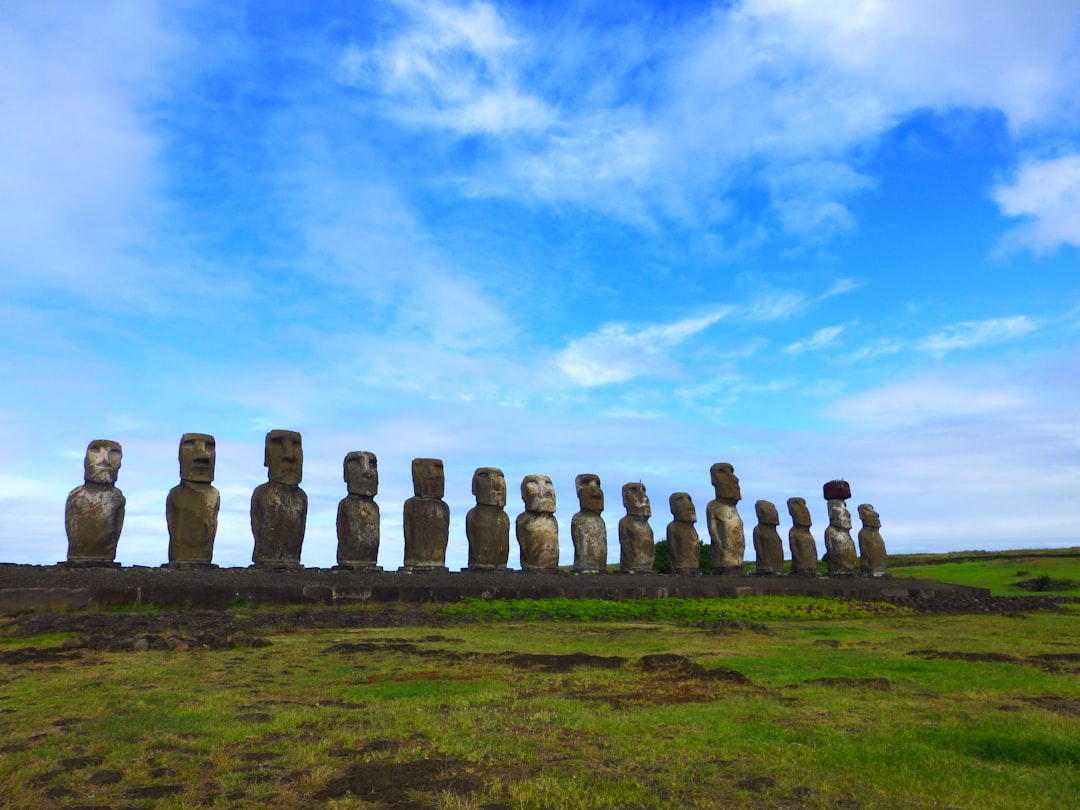

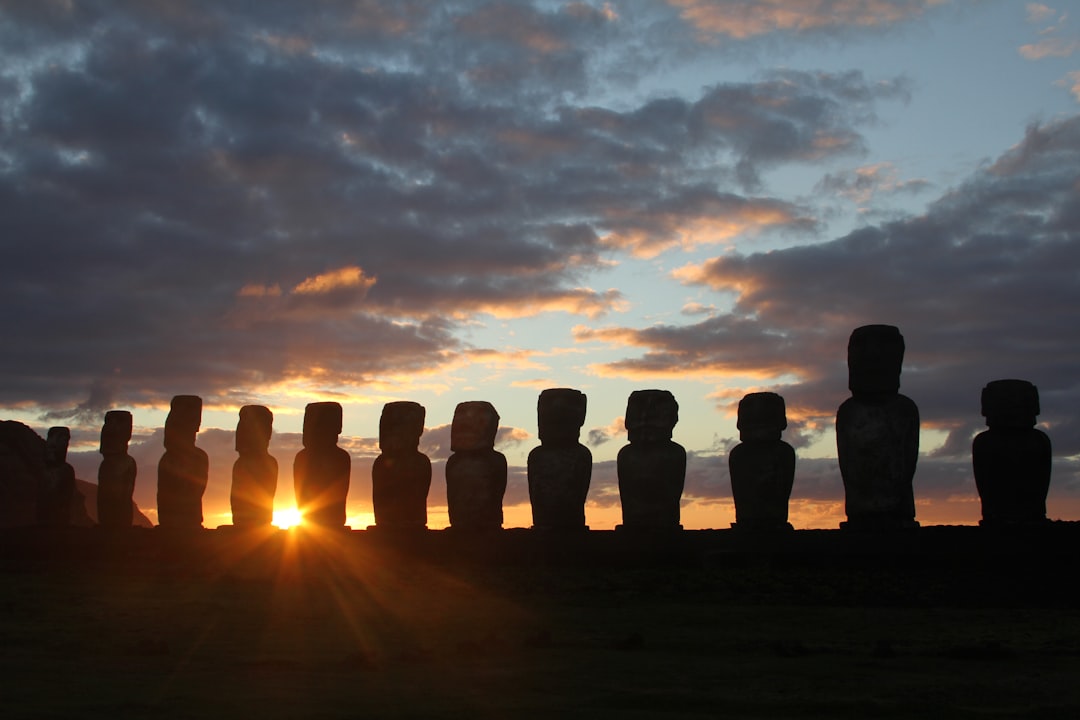
At the first light of dawn, when the sky over the Pacific Ocean shifts from black to burnt orange, the silhouettes of 15 volcanic stone statues stand out against the rising light with a breathtaking precision. Ahu Tongariki is not simply an archaeological site: it is one of the most powerful visions that the Pacific has to offer, an alignment of colossal figures that have gazed inland at the island as they have for centuries, silent and impassive.
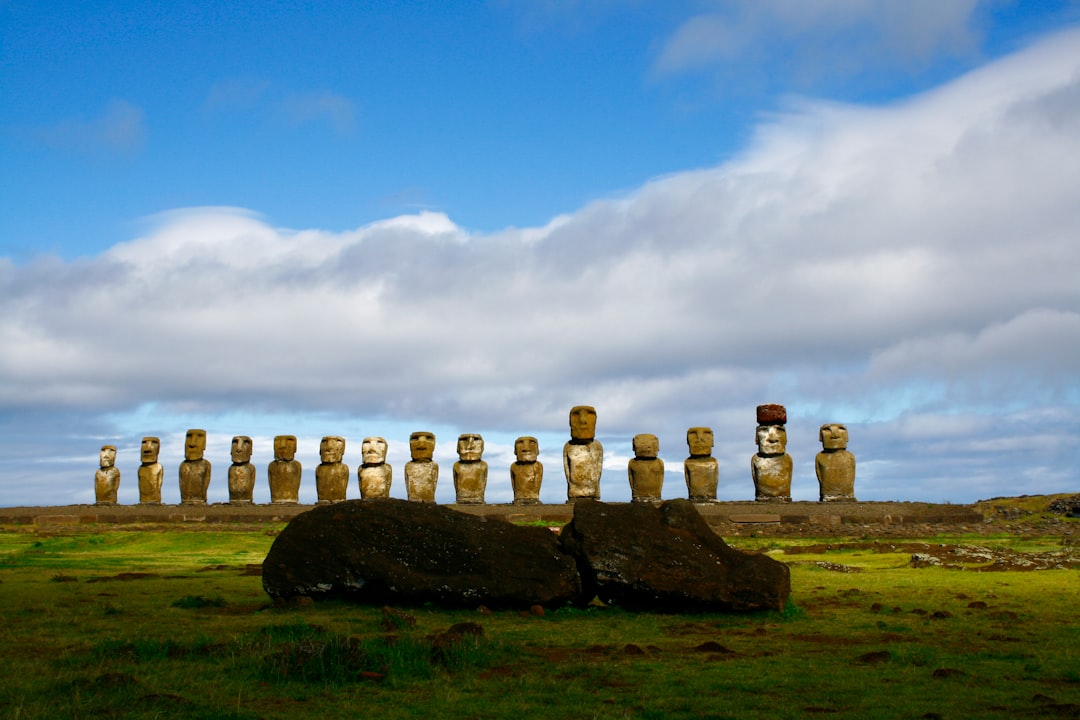
This ceremonial platform is located on the southeastern coast of Rapa Nui — the original name of Easter Island — and is the largest ahu ever built on the island. The 15 moai that stand there today have not always been upright: they were toppled during the period of internal conflicts known as Huri Mo'ai, and subsequently overwhelmed by a tsunami in 1960. Their resurrection is a story of international cooperation that is worth knowing before arriving.
The history of the site and its reconstruction
The tsunami of May 1960, caused by a magnitude 9.5 earthquake off the Chilean coast — the most powerful ever recorded in history — swept the statues up to 90 meters inland. Images from that time show a field of rocky ruins, a chaos of basalt and volcanic tuff. It was only in the 1990s that the site returned to its current form: between 1992 and 1996, an expedition led by Chilean archaeologist Claudio Cristino in collaboration with a Japanese crane company, Tadano Ltd., restored all 15 moai to their upright position.
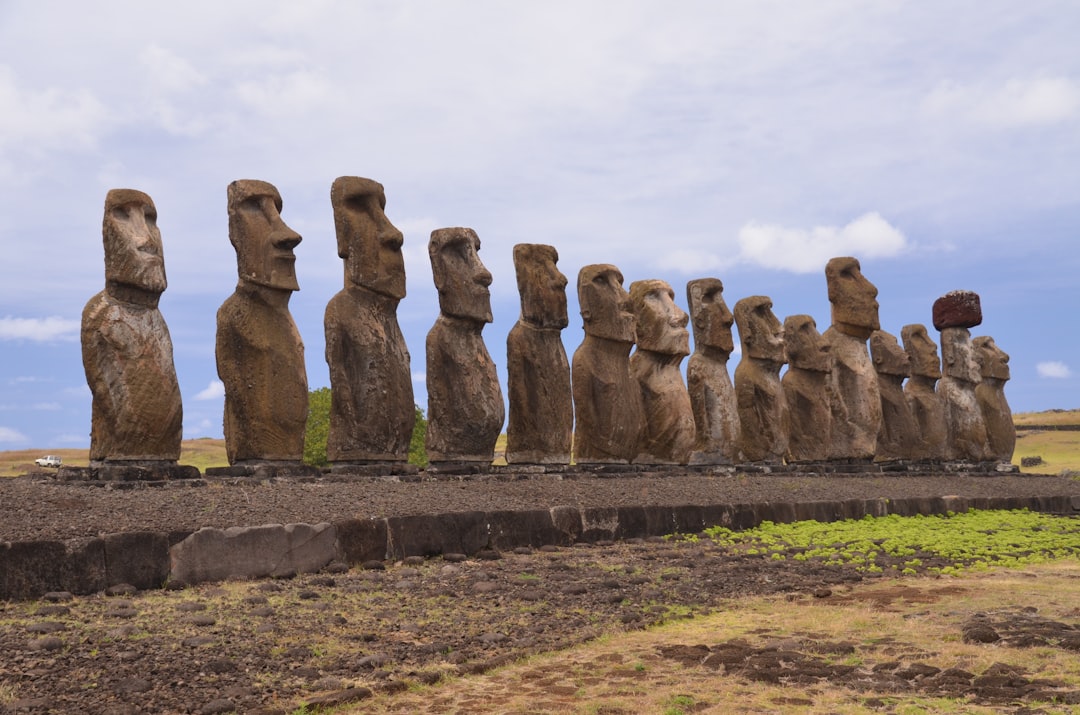
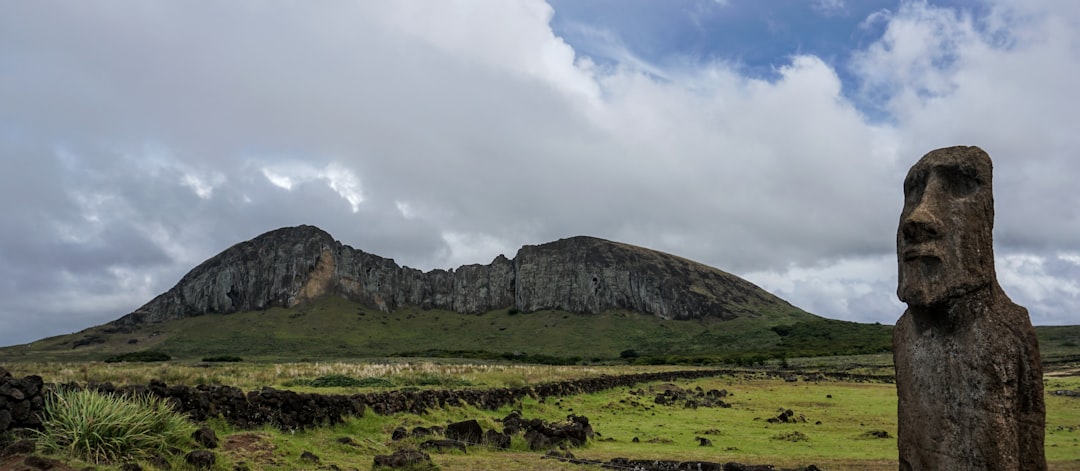
The moai of Ahu Tongariki vary considerably in size: the largest weighs about 86 tons and stands nearly 9 meters tall, making it one of the heaviest moai on the entire island. All are carved from the volcanic tuff of the Rano Raraku quarry, the volcano visible nearby, whose porous and relatively soft rock allowed Rapa Nui sculptors to work the figures with basalt tools. Only one of the 15 still carries its pukao, the cylindrical red scoria headdress that originally adorned many statues.
What to Observe Physically on Site
As you approach the platform, the first thing that strikes you is the difference in scale between the photographs seen online and reality. The statues appear enormous even from afar, but it is only when standing at the foot of the platform — about 2.5 meters high — that you perceive the physical weight of that presence. The faces of the moai are oriented towards the interior of the island, not towards the sea: a deliberate choice, as according to Rapa Nui tradition, the statues watched over the communities of the living.
Looking closely at the bases of the statues and the platform itself, you can see traces of restoration work: some stones show signs of modern cementing, especially visible in the lower part of the ahu. On the left side of the platform, there is still an isolated moai, fallen and unrestored, which gives an idea of how the site looked before the interventions of the 1990s. It is worth walking along the entire perimeter to grasp the differences between the individual statues: some have more pronounced features, while others show more advanced erosion caused by centuries of exposure to the elements.
The best time to visit: dawn
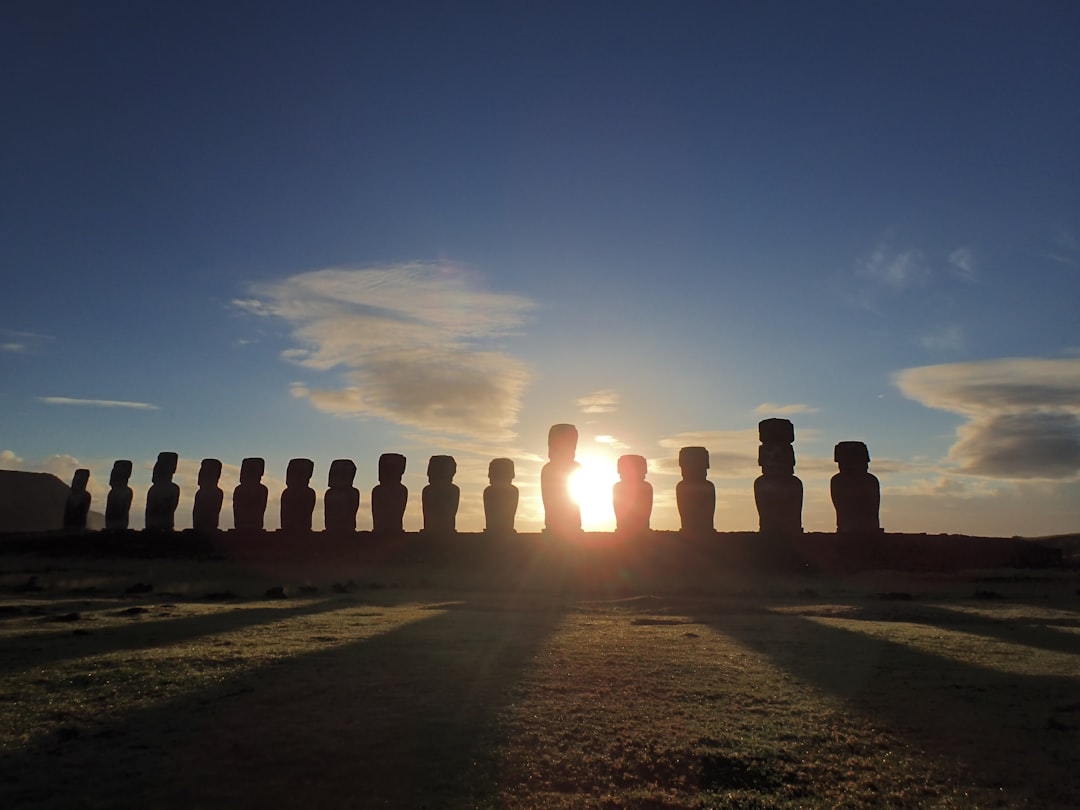
The most unanimous advice among visitors to Rapa Nui concerns the timing: arriving at Ahu Tongariki before dawn is essential. During the southern summer solstice, the sun rises almost perfectly behind the statues, dramatically illuminating their carved faces. But even in other seasons, the slanting light of the early morning transforms the tuff surfaces into something almost golden, while the rest of the landscape is still in shadow. Bringing a flashlight is useful for walking the path in the dark.
The site generally opens with dawn and requires an entrance ticket to the Rapa Nui national park, which costs around 80 US dollars for foreign visitors (updated rates can be verified on the CONAF website, the Chilean forestry agency). The ticket is valid for the entire park and also includes Rano Raraku. From Hanga Roa, the only inhabited center on the island, Ahu Tongariki is about 18 kilometers away: it can be easily reached by rental car or scooter, following the coastal road that runs along the southern side of the island.
How to include it in an itinerary on the island
Ahu Tongariki naturally pairs with a visit to the quarry of Rano Raraku, located less than a kilometer away. It is here that hundreds of unfinished or abandoned moai can still be found along the slopes of the volcano, some half-buried up to their heads. Spending half a day at both sites — arriving at dawn at Tongariki and continuing to the quarry when the light becomes fuller — is the most efficient way to understand the entire production cycle of the statues, from the quarry to the final platform.
Those with time can complete the route with a stop at Ahu Akivi, the only site on the island where the moai face the sea, for a direct comparison with the unusual orientation of Tongariki. Rapa Nui is small — about 165 square kilometers — and most of the main sites can be reached in less than an hour's drive from any point. But Ahu Tongariki, with those 15 stone faces emerging from the shadows of the Pacific, remains the moment that travelers remember the longest.