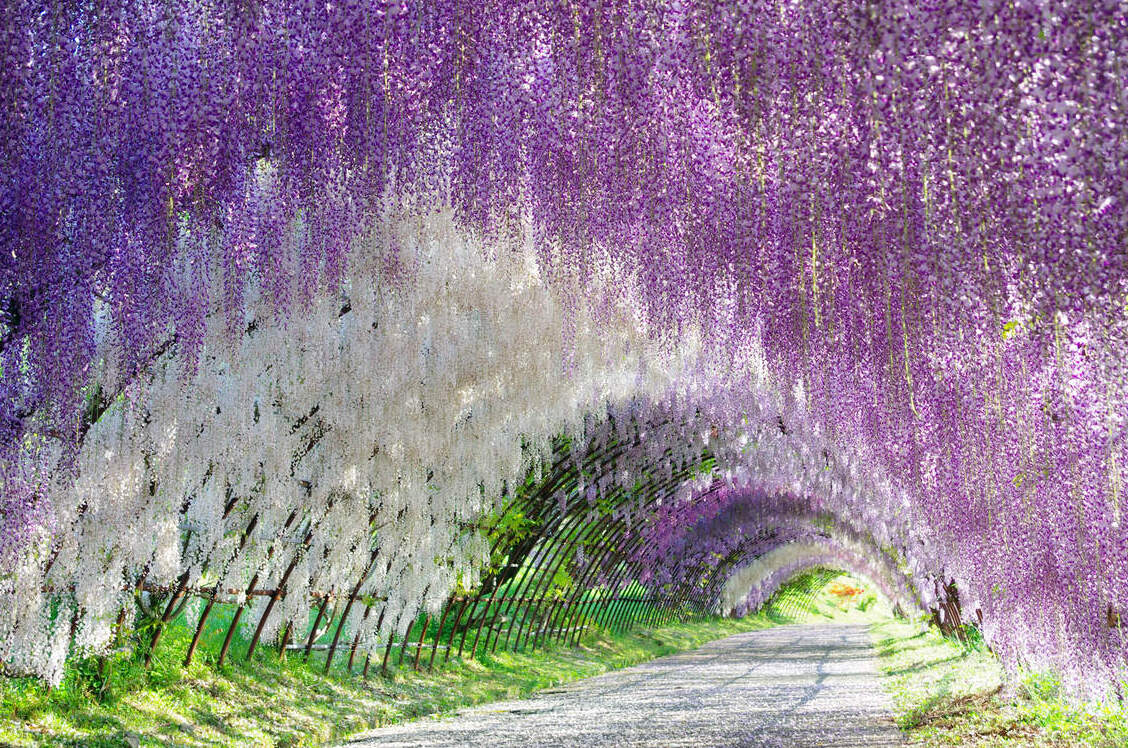

Nestled in the picturesque hills of Kitakyushu, the Kawachi Fuji Garden is a floral paradise that captivates visitors with its breathtaking beauty. This garden, renowned for its enchanting Wisteria Flower Tunnel, offers a sensory experience that is as vibrant as it is serene, drawing nature enthusiasts and photographers from around the globe.
The Kawachi Fuji Garden was established in 1977 by a local private owner, aiming to create a personal sanctuary that celebrates the splendor of the wisteria flower. Over the years, it has grown into one of Japan's most beloved floral attractions, yet it retains the intimate charm of its humble beginnings. This garden is a testament to Japan’s long-standing admiration for wisteria, which has been celebrated in Japanese culture for centuries. The flower is often found in ancient poetry and paintings, symbolizing love and tenderness.
Architecturally, the garden is a masterclass in natural design, with two mesmerizing tunnels that stretch over 100 meters each. These tunnels are draped in cascading clusters of colorful wisteria, ranging from delicate whites and soft pinks to vibrant purples and blues. Walking through these tunnels feels akin to wandering through a dream, with sunlight filtering through the blossoms, casting ethereal shadows on the path below. The garden also features trellises and domes that allow visitors to appreciate the blooms from various angles, offering a dynamic floral display that changes with each step.
The local culture in Fukuoka and the surrounding regions is deeply intertwined with nature, and the wisteria holds significant cultural importance. The Wisteria Festival, held annually during the blooming season, is a time when locals celebrate this natural wonder with traditional performances, tea ceremonies, and art exhibits. The festival underscores the Japanese principle of hanami, or flower viewing, which encourages people to pause and appreciate the fleeting beauty of nature.
Gastronomically, Fukuoka is a treasure trove for food lovers. While visiting the garden, one should not miss the opportunity to savor local delicacies such as Hakata ramen, known for its rich, pork-based broth, and mentaiko, spicy cod roe that pairs perfectly with rice. Springtime also brings a variety of seasonal sweets inspired by the wisteria, including fuji-mochi, a delicate rice cake flavored with wisteria essence.
Beyond its floral allure, the Kawachi Fuji Garden harbors a few lesser-known curiosities. For instance, the garden's layout is designed to mimic the natural growth patterns of wisteria in the wild, reflecting a deep respect for the plant’s natural form. Furthermore, the garden employs eco-friendly practices, such as using natural fertilizers and rainwater irrigation, demonstrating a commitment to sustainable horticulture.
For those planning a visit, the optimal time to experience the garden is during the wisteria’s peak bloom, typically late April to early May. It’s advisable to check bloom forecasts, as flowering times can vary due to weather conditions. Arriving early in the morning or late in the afternoon can enhance the experience, allowing visitors to avoid crowds and enjoy the tranquility of the garden.
A visit to the Kawachi Fuji Garden is not complete without paying attention to the subtle shifts in light and color as the sun moves across the sky. Each hour brings a new perspective, transforming the garden into a living canvas that reflects the ephemeral nature of beauty. As you walk through this floral wonderland, take a moment to breathe deeply, capturing the delicate fragrance that lingers in the air—a reminder of nature’s quiet, yet profound, artistry.