





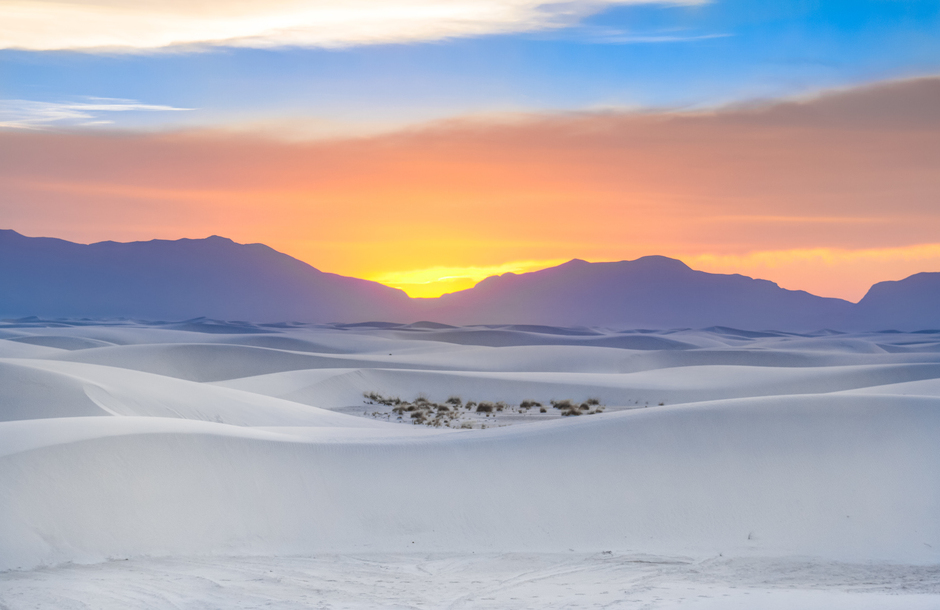
In the heart of New Mexico lies a surreal landscape that defies imagination—White Sands National Monument, an awe-inspiring expanse of glistening white dunes that stretch across 275 square miles. This otherworldly terrain, comprised of gypsum crystals, is the largest of its kind on the planet. As you step into this sea of white, you are walking into a place where time and nature have crafted a masterpiece that is both timeless and ephemeral.
The origins of White Sands date back to the Permian Period, about 250 million years ago, when this area was submerged under a shallow sea. As the waters receded, they left behind sediments that eventually formed the gypsum-rich deposits of the Tularosa Basin. Millennia later, wind and water conspired to sculpt these deposits into the striking dunes we see today. Declared a national monument on January 18, 1933, by President Herbert Hoover, White Sands was preserved not only for its natural beauty but also for its ecological importance.
Though nature is the primary artist here, White Sands National Monument is a canvas that has inspired human creativity for centuries. Indigenous peoples, including the Apache and Mescalero tribes, have long revered this place, weaving its stark beauty into their cultural narratives and artistic expressions. While there are no permanent architectural structures within the monument due to its protected status, the harmony of the landscape itself is a testament to the artistry of nature.
The cultural tapestry surrounding White Sands is rich and varied. The nearby town of Alamogordo serves as a gateway to the dunes and offers a glimpse into the region's vibrant traditions. The White Sands Balloon Invitational, held annually in September, is a celebrated event that fills the skies with colorful hot air balloons, providing a striking contrast against the alabaster sands. This festival is a modern testament to the area's cultural vibrancy, drawing visitors from around the globe.
Gastronomy in the region reflects a blend of Native American, Mexican, and Southwestern flavors. Visitors to White Sands can explore local culinary delights in Alamogordo. Traditional dishes such as enchiladas smothered in green chile sauce, posole (a hominy stew), and sopapillas drizzled with honey offer a taste of the region's rich heritage. Pair these with a glass of locally brewed New Mexico wine or a cold craft beer for a truly authentic experience.
Beyond its breathtaking vistas and cultural significance, White Sands harbors lesser-known curiosities that intrigue the inquisitive traveler. One such phenomenon is the occurrence of moonlit hikes, where visitors can explore the dunes under the silvery glow of the moon, an experience that transforms the landscape into a dreamscape. The park is also home to a diverse array of wildlife adapted to its unique environment, including the endemic white-tailed jackrabbit and the elusive kit fox.
For those planning a visit to this pristine wonder, timing is essential. The best time to explore White Sands is during the cooler months of late fall through early spring, when temperatures are mild and the sun casts a gentle glow on the dunes. Arriving in the early morning or late afternoon is recommended to witness the dramatic play of light and shadow across the sands. Be sure to bring sun protection and plenty of water, as the high desert climate can be deceptively harsh.
Visitors should also take note of the park's visitor center, which offers educational exhibits and ranger-led programs that delve into the natural and cultural history of the area. For those seeking a more immersive experience, the park's Backcountry Camping offers a unique opportunity to spend a night under the stars amid the dunes, an experience not soon forgotten.
As you leave White Sands National Monument, you'll carry with you the silence of the dunes and the whispers of the wind, echoes of a place where nature's artistry reigns supreme. Whether drawn by its natural allure or cultural depth, a visit to White Sands is a journey into the heart of one of Earth’s most spectacular landscapes.