
← Back

The Ochre of Roussillon

Massiccio del Luberon, 84560 Ménerbes, Francia ★★★★☆ 335 views
Cristina Gregoracci
Ménerbes
🏆 AI Trip Planner 2026

Get the free app

Discover the best of Ménerbes with Secret World — the AI trip planner with 1M+ destinations. Get personalized itineraries, hidden gems and local tips. Free on iOS & Android.

🧠 AI Itineraries 🎒 Trip Toolkit 🎮 KnowWhere Game 🎧 Audio Guides 📹 Videos
Scan to download iOS / Android
Scan for AppGallery Huawei users

About The Ochre of Roussillon

The Ochre of Roussillon - Ménerbes | Secret World Trip Planner

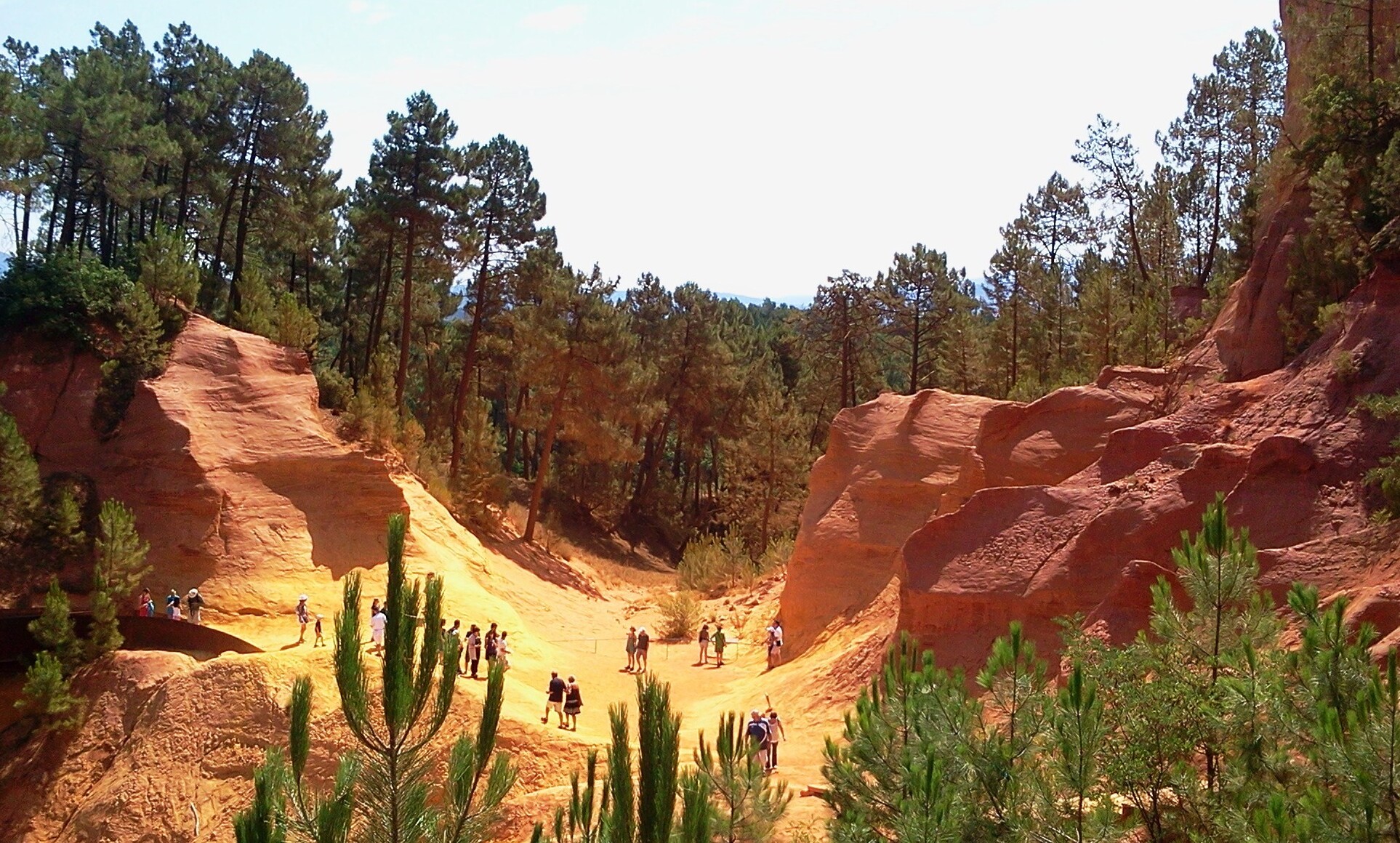
The old ochre quarries are an exceptional site, one of the best natural wonders in France. The ochre of the Luberon fascinates. From Roussillon to Gignac, by way of Villars, Gargas and Rustrel, the former ochre quarries of the Apt valley (Vaucluse) surge from the past, hiking trails have been blazed, panoramic viewpoints opened up, signs of bygone days brought up to date and car parks can be found. This incredible landscape, sometimes carved by man, sometimes sculpted by the winds’ natural erosion, is absolutely fascinating. These natural pigments have been used since prehistoric times and we can see evidence of that on the walls of caves. Then in 1780, Jean Etienne Astier from the village of Roussillon discovered that, after processing, ochre became an inalterable and non-toxic dye. He became the first ochre extractor in France and in the 19th century the exploitation of the mineral deposits became industrial. In the Vaucluse, the open-pit quarries and the exceptional thickness of the lodes (up 15 metres) made extraction very easy and production reached impressive figures: a record of 40,000 tons was set in 1929. The pigment is used in the making of stucco for the Provençal houses, because it is heat and sun resistant, but also as a component, sometimes unexpected, of certain products: cheese rinds, linoleum, kraft paper, cardboard, ceramic, rubber and cosmetics. The 1929 economic crisis and the development of synthetic dyes would toll the knell for industrial production of the pigment. Traditional production declined more slowly and is residual today. The old ochre factory, or Mathieu factory, lying for a long time in a state of a industrial wasteland, can today be visited.

The Ochre of Roussillon - Ménerbes | Secret World Trip Planner
🗺 La app de los tesoros hispanos

Plan your visit to Ménerbes

Suggested itinerary near The Ochre of Roussillon

MAJ+
500.000+ travelers worldwide
  1. 🌅
    Morning
    The Ochre of Roussillon
    📍 Ménerbes
  2. ☀️
    Afternoon
    The Abbey de Sénanque & the secret Valley of Lavander
    📍 13 km · Ménerbes
  3. 🌆
    Evening
    Roussillon, France Wonder
    📍 13 km · Ménerbes

Buy Unique Travel Experiences

Powered by Viator

See more on Viator.com

Explore nearby · Ménerbes

Frequently Asked Questions

The ochre quarries of the Apt valley are among the best natural wonders in France, featuring an exceptional landscape carved by both historical mining and natural erosion. The area showcases remarkable deposits with lodes up to 15 metres thick, making it ideal for exploring the history of ochre extraction and enjoying panoramic viewpoints along marked hiking trails.
Jean Etienne Astier from Roussillon discovered in 1780 that ochre could be processed into an inalterable and non-toxic dye, becoming France's first ochre extractor. This discovery led to industrial-scale exploitation in the 19th century, with production peaking at 40,000 tons in 1929 before declining due to the 1929 economic crisis and synthetic dyes.
While traditional ochre production is now residual, the historic Mathieu factory (the old ochre factory) has been restored and is open for visitors to explore its industrial heritage. The pigment itself continues to be used in traditional Provençal stucco for houses due to its heat and sun resistance, and appears in unexpected products like cosmetics, cheese rinds, and ceramics.
The ochre quarries stretch from Roussillon to Gignac, with significant sites at Villars, Gargas, and Rustrel. All these locations feature accessible hiking trails, panoramic viewpoints, and car parks, making it easy to explore multiple quarry sites throughout the Apt valley in Vaucluse.
Ochre has been used since prehistoric times, with evidence visible on the walls of caves in the area, demonstrating how ancient civilizations valued these natural pigments. The transition from prehistoric use to Jean Astier's 1780 discovery and subsequent industrial exploitation represents thousands of years of ochre's importance to human civilization in Provence.