
← Back

The Birthplace of Unamuno

Erronda Kalea, 16, 48005 Bilbo, Bizkaia, Spain ★★★★☆ 146 views
Germana Pertini
Bilbo
🏆 AI Trip Planner 2026

Get the free app

Discover the best of Bilbo with Secret World — the AI trip planner with 1M+ destinations. Get personalized itineraries, hidden gems and local tips. Free on iOS & Android.

🧠 AI Itineraries 🎒 Trip Toolkit 🎮 KnowWhere Game 🎧 Audio Guides 📹 Videos
Scan to download iOS / Android
Scan for AppGallery Huawei users

About The Birthplace of Unamuno

The Birthplace of Unamuno - Bilbo | Secret World Trip Planner

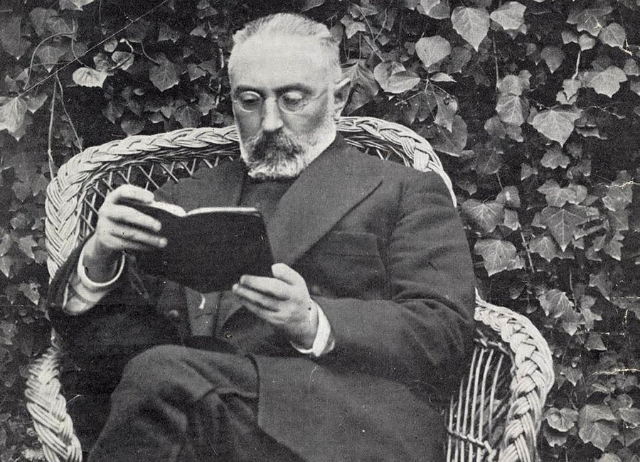
It is difficult to tour the city without feeling the presence of Miguel de Unamuno. Miguel de Unamuno, in full Miguel De Unamuno Y Jugo, (born Sept. 29, 1864, Bilbao, Spain—died Dec. 31, 1936, Salamanca), educator, philosopher, and author whose essays had considerable influence in early 20th-century Spain.

Unamuno was the son of Basque parents. After attending the Vizcayan Institute of Bilbao, he entered the University of Madrid in 1880 and in four years received a doctorate in philosophy and letters. Six years later he became professor of Greek language and literature at the University of Salamanca. In 1901 Unamuno became rector of the university, but he was relieved of his duties in 1914 after publicly espousing the Allied cause in World War I. His opposition in 1924 to General Miguel Primo de Rivera’s rule in Spain resulted in his forced exile to the Canary Islands, from which he escaped to France. When Primo de Rivera’s dictatorship fell, Unamuno returned to the University of Salamanca and was reelected rector of the university in 1931, but in October 1936 he denounced General Francisco Franco’s Falangists, was removed once again as rector, and was placed under house arrest. He died of a heart attack two months later.

His hometown has dedicated many tributes to him, such as Unamuno Plaza. What is less well known is that at the address of 16 Calle Ronda, very close to the Plaza, is the house where the writer was born and raised. You have to be careful not to miss it because it usually goes completely unnoticed.


🗺 La app de los tesoros hispanos

Plan your visit to Bilbo

Suggested itinerary near The Birthplace of Unamuno

MAJ+
500.000+ travelers worldwide
  1. 🌅
    Morning
    The Birthplace of Unamuno
    📍 Bilbo
  2. ☀️
    Afternoon
    Bilbao’s Museum of Reproductions
    📍 0.5 km · Bilbo
  3. 🌆
    Evening
    Abando Station
    📍 0.6 km · Bilbo

Buy Unique Travel Experiences

Powered by Viator

See more on Viator.com

Explore nearby · Bilbo

Frequently Asked Questions

Unamuno's birthhouse is located at 16 Calle Ronda, very close to Unamuno Plaza in Bilbao. The building is easy to miss as it usually goes completely unnoticed among other structures in the area, so visitors should look carefully when exploring this street.
Unamuno Plaza is one of many tributes dedicated to Miguel de Unamuno in his hometown of Bilbao, reflecting the city's honor for the influential philosopher and writer. The plaza serves as a central landmark near his birthhouse at Calle Ronda 16, making it a good reference point for visitors exploring Unamuno-related sites.
While the house at 16 Calle Ronda where Unamuno was born and raised still stands in Bilbao, there is no specific information indicating it operates as a public museum or has official visiting hours. Visitors can view the exterior of the building, though they should approach respectfully as it appears to be a private residence.
The birthhouse at 16 Calle Ronda is notoriously easy to overlook due to its inconspicuous appearance among other buildings in the area. Visitors should plan to visit the nearby Unamuno Plaza first to orient themselves, then carefully search for the specific address while exploring Calle Ronda.
Miguel de Unamuno was born in Bilbao on September 29, 1864, and became an influential educator, philosopher, and author whose essays significantly impacted early 20th-century Spain. His legacy is so important to his hometown that Bilbao has dedicated multiple tributes to him, making him an integral part of the city's cultural identity.