
← Back

Speyer Cathedral

Domplatz, 67346 Speyer, Germany ★★★★☆ 254 views
Renata Forgione
Speyer
🏆 AI Trip Planner 2026

Get the free app

Discover the best of Speyer with Secret World — the AI trip planner with 1M+ destinations. Get personalized itineraries, hidden gems and local tips. Free on iOS & Android.

🧠 AI Itineraries 🎒 Trip Toolkit 🎮 KnowWhere Game 🎧 Audio Guides 📹 Videos
Scan to download iOS / Android
Scan for AppGallery Huawei users

About Speyer Cathedral

Speyer Cathedral - Speyer | Secret World Trip Planner

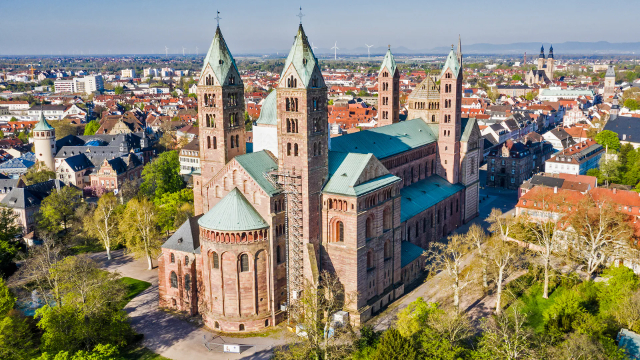
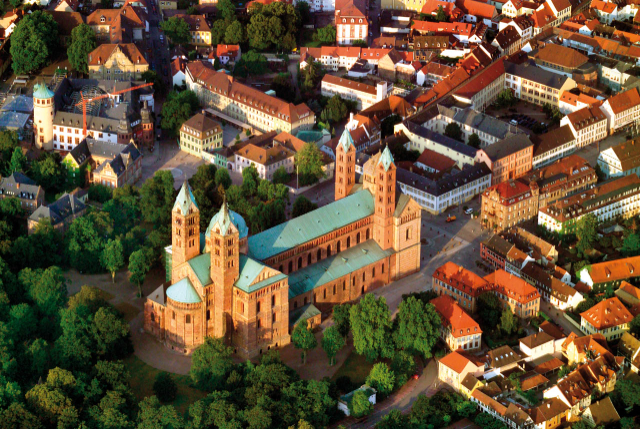
Speyer Cathedral, a basilica with four towers and two domes, was founded by Conrad II in 1030 and remodelled at the end of the 11th century. It is one of the most important Romanesque monuments from the time of the Holy Roman Empire. The cathedral was the burial place of the German emperors for almost 300 years. Speyer Cathedral is historically, artistically and architecturally one of the most significant examples of Romanesque architecture in Europe. It is, by virtue of its proportions, the largest, and, by virtue of the history to which it is linked, the most important.
Speyer Cathedral - Speyer | Secret World Trip Planner

The Cathedral is an expression and self-portrayal of the abundance of imperial power during the Salian period (1024 - 1125) and was built in conscious competition to the Abbey of Cluny as the building representative of the papal opposition.

The Cathedral incorporates the general layout of St Michael of Hildesheim and brings to perfection a type of plan that was adopted generally throughout the Rhineland. This plan is characterized by the equilibrium of the eastern and western blocks and by the symmetrical and singular placement of the towers which frame the mass formed by the nave and the transept. Under Henry IV renovations and extensions were undertaken. Speyer Cathedral is the first known structure to be built with a gallery that encircles the whole building. The system of arcades added during these renovations was also a first in architectural history.

Speyer Cathedral - Speyer | Secret World Trip Planner

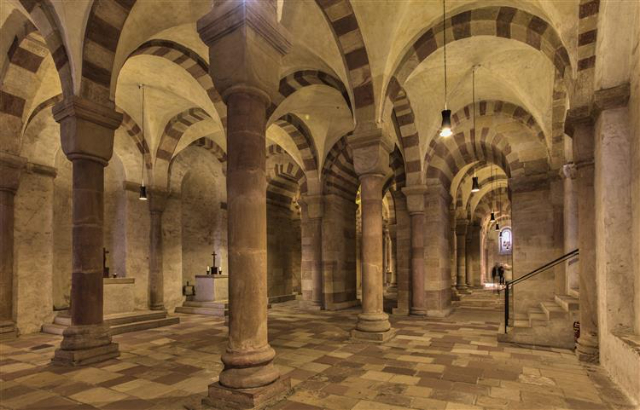
In its size and the richness of its sculptures, some created by Italian sculptors, it stands out among all contemporary and later Romanesque churches in Germany, and it had a profound influence on the pattern of their ground plans and vaulting. Today – after the destruction of the Abbey of Cluny – Speyer Cathedral is the biggest Romanesque church in the world. Likewise its crypt, consecrated in 1041, is the biggest hall of the Romanesque era. No less than eight medieval emperors and kings of the Holy Roman Empire of the German Nation from Konrad II to Albrecht of Habsburg in 1309 were laid to rest in its vault. In 1689 the Cathedral was seriously damaged by fire. The reconstruction of the west bays of the nave from 1772 to 1778, as an almost archaeologically exact copy of the original structure, can be regarded as one of the first great achievements of monument preservation in Europe. The westwork, rebuilt from 1854 to 1858 by Heinrich Hübsch on the old foundations, is by contrast, a testi­mony to Romanticism’s interpretation of the Middle Ages, and as such an independent achievement of the 19th century. Commissioned by the Bavarian King Ludwig I., the interior was painted in late Nazarene style by the school of Johannes Schraudolph and Josef Schwarzmann from 1846 to 1853.

Speyer Cathedral - Speyer | Secret World Trip Planner
🗺 La app de los tesoros hispanos

Plan your visit to Speyer

Suggested itinerary near Speyer Cathedral

MAJ+
500.000+ travelers worldwide
  1. 🌅
    Morning
    Speyer Cathedral
    📍 Speyer
  2. ☀️
    Afternoon
    Discover the Speyer Cathedral: A Romanesque Gem in Germany
    📍 0 km · Speyer
  3. 🌆
    Evening
    Historical Museum of the Palatinate
    📍 0.2 km · Speyer

Buy Unique Travel Experiences

Powered by Viator

See more on Viator.com

Explore nearby · Speyer

Frequently Asked Questions

Speyer Cathedral holds this distinction both in terms of its impressive proportions and the historical significance of its construction. After the destruction of the Abbey of Cluny, which it was built to rival during the Salian period, Speyer became the largest Romanesque church remaining in the world, showcasing the abundant imperial power through its monumental size and architectural grandeur.
Speyer Cathedral was the first known structure to be built with a gallery encircling the entire building, and it introduced an innovative system of arcades during renovations under Henry IV. These groundbreaking features had a profound influence on the architectural patterns, ground plans, and vaulting of Romanesque churches throughout Germany and Europe.
At least eight medieval emperors and kings of the Holy Roman Empire were buried in Speyer Cathedral, making it the burial place of German emperors for almost 300 years. This made the cathedral one of the most important religious and political centers of the Holy Roman Empire during the medieval period.
Speyer Cathedral was founded by Conrad II in 1030 and remodeled at the end of the 11th century, representing one of the most important Romanesque monuments from the time of the Holy Roman Empire. Its distinctive design features a basilica layout with four towers and two domes, characterized by equilibrium between eastern and western blocks and symmetrical tower placement.
The crypt of Speyer Cathedral, consecrated in 1041, is the biggest hall crypt of the Romanesque era, adding to the cathedral's architectural significance. This impressive underground space further demonstrates the scale and ambition of the cathedral's construction during the height of imperial power.