← Back

Spanish Steps

Piazza di Spagna, Roma, Italia ★★★★☆ 167 views
Uma Spike
Roma
🏆 AI Trip Planner 2026

Get the free app

Discover the best of Roma with Secret World — the AI trip planner with 1M+ destinations. Get personalized itineraries, hidden gems and local tips. Free on iOS & Android.

🧠 AI Itineraries 🎒 Trip Toolkit 🎮 KnowWhere Game 🎧 Audio Guides 📹 Videos
Scan to download iOS / Android
Scan for AppGallery Huawei users

About Spanish Steps

Spanish Steps - Roma | Secret World Trip Planner

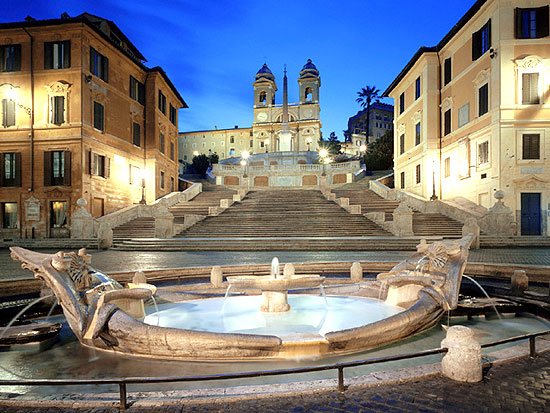
Piazza di Spagna is one of the most famous squares in the world, as well as one of the most monumental and scenic urban complexes in Rome. nitially named after the Trinity, from the church that dominates it, it was later called Piazza di Spagna in reference to the Spanish ambassador's residence located here.
Spanish Steps - Roma | Secret World Trip Planner

At the center of the square is the fountain of the Barcaccia, dated 1629, by Pietro Bernini(father of GianLorenzo, who collaborated on the work). It was made in commemoration of the Tiber flood of 1598, and its semi-submerged boat shape was a ruse to disguise the technical problem of low water pressure.

At the center of the southeast triangle of the square stands the column of the Immaculate Conception, found in 1777 in the monastery of St. Mary of the Conception in Campo Marzio and placed here in 1856 to commemorate the dogma proclaimed by Pius IX. On top of the veined cipolin column is a bronze statue of the Virgin. A little further on is the palace of Propaganda Fide, headquarters of the congregation of the same name established by Gregory XV in 1622. In 1644 Bernini modified its façade on the square, while Borromini, who took over as architect of the congregation in 1646, built the extension on the streets of Propaganda and Capo le Case: the elevation on the street is one of the most innovative and ingenious Baroque creations. On the opposite side of the square, starting from the northwest triangle, is the long, straight line of Via del Babuino--named after the statue on the side of the church of St. Anastasius--drawn between 1525 and 1543, and always considered the street of antiquarians. But it is the central staircase that makes the square one of the most spectacular settings in the city. It was built by Francesco De Sanctis, in 1723-26, at the behest of Innocent XIII, and gave a definitive fix to the considerable difference in height between the square and the upper Trinity Church.


Spanish Steps - Roma | Secret World Trip Planner
🗺 La app de los tesoros hispanos

Plan your visit to Roma

Suggested itinerary near Spanish Steps

MAJ+
500.000+ travelers worldwide
  1. 🌅
    Morning
    Spanish Steps
    📍 Roma
  2. ☀️
    Afternoon
    Rome | Church of Sant'Andrea delle Fratte
    📍 0.4 km · Roma
  3. 🌆
    Evening
    Rome | Goethe's House Museum
    📍 0.5 km · Roma

Buy Unique Travel Experiences

Powered by Viator

See more on Viator.com

Explore nearby · Roma

Frequently Asked Questions

The square was initially named after the Trinity Church that dominates it, but later became known as Piazza di Spagna in reference to the Spanish ambassador's residence located in the square. Despite the name, the famous staircase connecting the square to the Trinity Church is officially called the Scalinata di Trinità dei Monti, though it's commonly referred to as the Spanish Steps by visitors worldwide.
The Fountain of Barcaccia, created in 1629 by Pietro Bernini (father of the famous Gian Lorenzo Bernini), sits at the center of the square and commemorates the devastating Tiber flood of 1598. Its distinctive semi-submerged boat design was actually a clever engineering solution to disguise the technical problem of low water pressure in the square's water supply system.
The monumental staircase was built between 1723-1726 by architect Francesco De Sanctis, commissioned by Pope Innocent XIII. The stairs were constructed to solve the significant height difference between Piazza di Spagna and the Trinity Church above, making them one of the most spectacular architectural features in Rome.
The column was originally found in 1777 in the monastery of St. Mary of the Conception and was relocated to Piazza di Spagna in 1856 to commemorate the dogma of the Immaculate Conception proclaimed by Pope Pius IX. It features a veined cipolin marble column topped with a bronze statue of the Virgin Mary.
The Palazzo di Propaganda Fide showcases exceptional Baroque architecture, with Bernini modifying its main façade in 1644 and Borromini building an innovative extension starting in 1646. Borromini's elevation on the street side is considered one of the most creative and ingenious Baroque creations in Rome, making it a must-see for architecture enthusiasts.