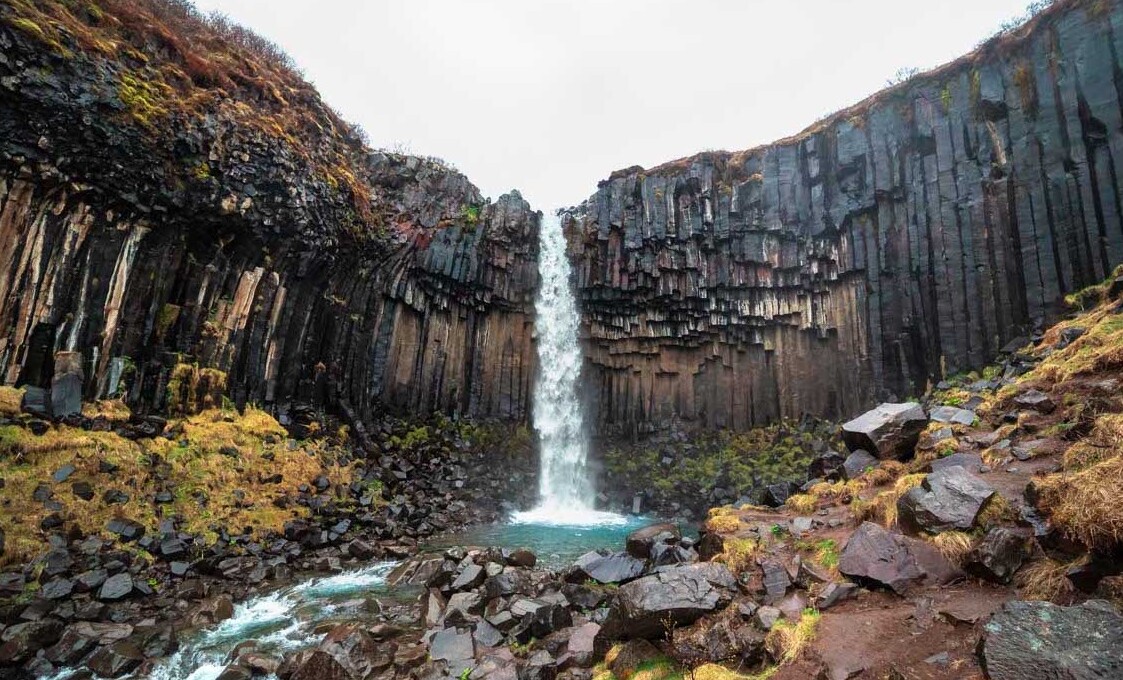

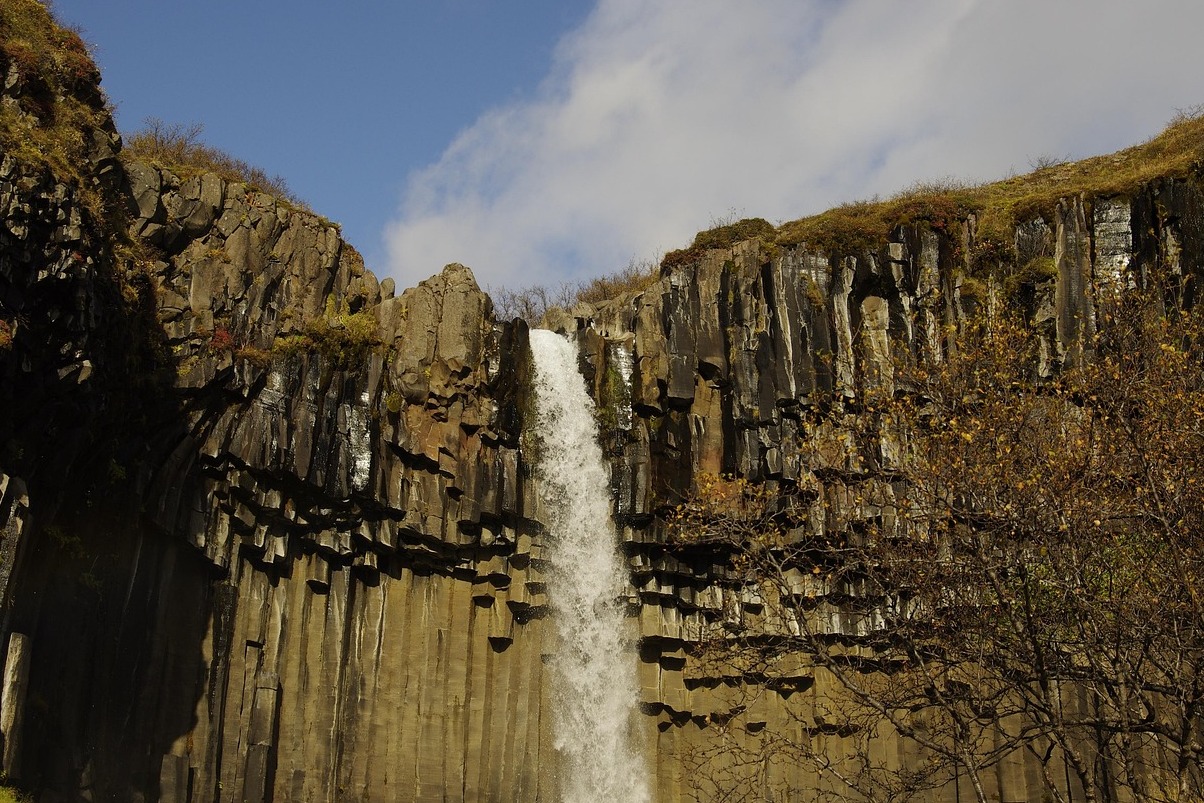
Svartifoss, often referred to as the black waterfall, is an enchanting spectacle nestled within Skaftafell National Park, the second largest national park in Iceland. This stunning waterfall, with a drop of 20 meters (approximately 80 feet), is framed by towering black basalt columns that resemble the majestic pipes of an organ. This natural wonder not only attracts visitors for its breathtaking beauty but also serves as a testament to the unique geological features of the region.
### History and Origins Skaftafell National Park was established in 1967, though the area has been significant long before that, with evidence of human habitation dating back to the Viking Age. The name Skaftafell derives from the Skaftá River, which flows through the region, and it is believed that the area was a popular settlement for early Norse farmers. The park was designated to protect its unique natural landscape, including the dramatic Svartifoss. The history of the land itself is deeply intertwined with Icelandic folklore, where tales of elves and hidden people abound, often inspired by the striking formations of the landscape.
### Art and Architecture While Svartifoss stands as a natural piece of art, it has also inspired human creativity. The waterfall's distinctive basalt columns have drawn comparisons to architectural styles, particularly Art Nouveau, where natural forms and structures are emulated in design. The columns, formed through volcanic activity, have influenced Icelandic architecture, with many local buildings showcasing similar geometric patterns inspired by nature. The renowned Icelandic architect Ríkey Björk has often cited this waterfall as a muse for her designs, demonstrating how nature's beauty seamlessly intertwines with human creativity.
### Local Culture and Traditions The culture surrounding Skaftafell is rich, with traditions rooted in the land and its history. Local customs often revolve around the rhythms of nature, with seasonal festivals celebrating the mid-summer solstice and the winter’s first snow. One notable event is the Skaftafell Culture Festival, held annually in late July, featuring traditional Icelandic music, dance, and storytelling that honor the region's history and folklore. Visitors can also witness locals participating in age-old customs, such as fishing and foraging, reflecting a deep connection to the land.
### Gastronomy Visitors to Skaftafell National Park can indulge in traditional Icelandic cuisine, which deeply reflects the local culture and geography. Dishes often feature fresh fish, lamb, and locally sourced vegetables. One must-try dish is the Icelandic lamb soup, a hearty meal perfect for warming up after a day of exploration. Another local favorite is skyr, a creamy dairy product akin to yogurt, which can be enjoyed plain or with berries. Many local restaurants also serve harðfiskur, a traditional dried fish snack, which pairs well with a local beer or a glass of Brennivín, Iceland’s signature schnapps.
### Lesser-Known Curiosities While the stunning visuals of Svartifoss are widely recognized, there are lesser-known aspects that intrigue many visitors. For instance, the waterfall's unique coloration is due to the high content of iron and other minerals within the basalt columns, lending it the dark hue that inspired its name. Another curious fact is that the Svartifoss area is a prime location for photography, particularly during the golden hour, when the sunlight creates a magical glow. Additionally, many hiking trails lead to hidden viewpoints that reveal breathtaking landscapes of glaciers, valleys, and even glimpses of the Vatnajökull glacier, one of Europe’s largest ice caps.
### Practical Visitor Information The best time to visit Skaftafell National Park and Svartifoss is during the summer months, from June to August, when the weather is mild, and the days are long, allowing ample time for exploration. However, autumn also offers a stunning display of colors, making it a photographer's paradise. Visitors should wear sturdy hiking boots and dress in layers, as the weather can change rapidly. When exploring the area, be sure to look for the informative signs that share the history and ecology of the park, enhancing the overall experience.
To make the most of your visit, consider downloading the Secret World app for a personalized itinerary that highlights the best sights and experiences tailored to your interests.