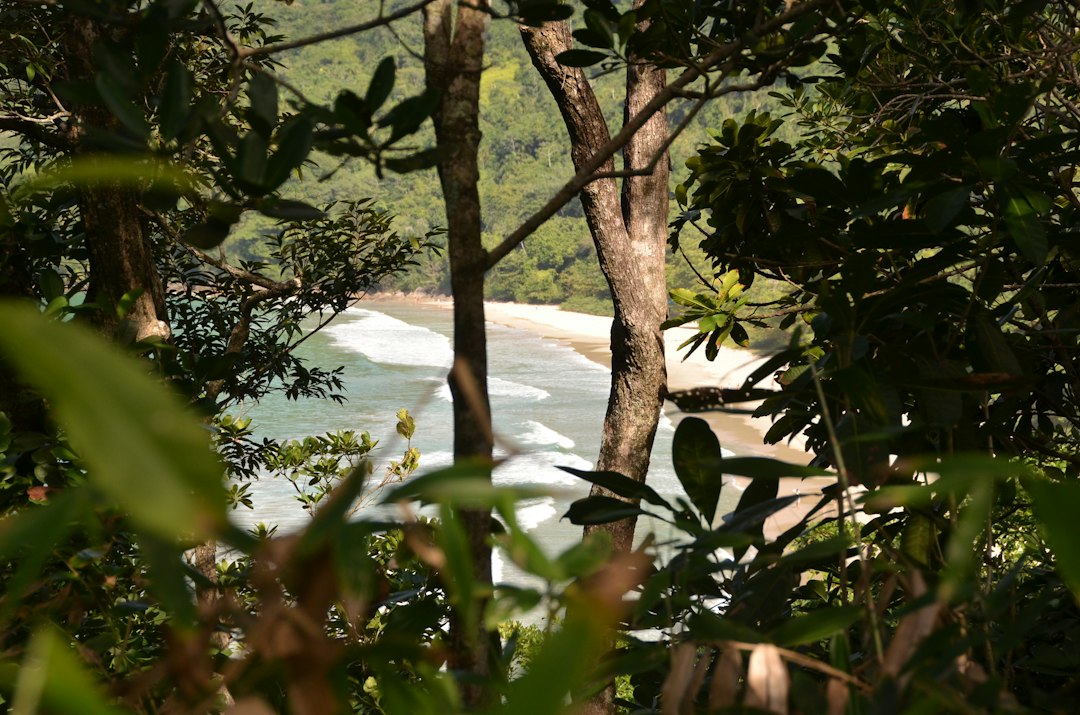

The trail begins where the paved road ends, near the village of Laranjeiras, a few kilometers from Paraty. From there, about 90 minutes of walking through the Atlantic Forest — the Brazilian Atlantic Forest — separates the traveler from one of the most secluded beaches in the state of Rio de Janeiro. The path rises and falls among exposed roots and dense vegetation, with the sound of the ocean only becoming audible in the last few minutes, almost as a surprise.
Praia do Sono is not accessible by car. Those who do not want to walk can arrive by boat from Paraty, traveling south along the coast of the Serra da Bocaina. In both cases, isolation is the first thing that is felt upon arrival: no chain hotels, no facilities equipped with plastic loungers, no loud music. Just a curve of golden sand about one kilometer long, flanked on either side by forest-covered promontories.
The color of the water and the sand
The water at Praia do Sono varies from emerald green near the shore, where the sandy bottom is shallow and bright, to a deeper and darker blue further out. On days with clear skies, the transition between the two tones is sharp and visible to the naked eye from the beach. There are no major rivers flowing into this stretch of coast, which helps maintain the clarity of the water even after rains.
The sand is fine and warm yellow in color, not white like in some Caribbean atolls, but with a warm hue that reflects the afternoon light well. At the ends of the beach, where the cliffs descend towards the sea, dark granite rocks typical of this portion of the Brazilian coast appear, ideal for observing small fish in the natural pools left by the low tide.
The fishing village
At the southern end of the beach lies a small inhabited core, a community of traditional fishermen who have lived here for generations. The houses are simple, many with boats pulled ashore in front of the entrance. Some residents run small restaurants — locally called barracas — where you can eat fresh fish, shrimp, and typical dishes of caiçara cuisine, the gastronomic tradition of the coastal communities in this region.
The presence of the village distinguishes Praia do Sono from many other remote beaches in Brazil: it is not a completely uninhabited place, but neither is it touristy. Visitors share the space with those who truly live here, which creates a different atmosphere compared to beaches built around tourism. It is possible to buy fresh coconut water directly from the locals, and in high season, some boats offer excursions to the natural pools in the surrounding area.
The Atlantic Forest as a Frame
What perhaps strikes more than the water and sand is the natural context. The Atlantic Forest descends to the edges of the beach, and the wooded hills surrounding the bay create a visual and sound barrier from the rest of the world. This forest is considered one of the most threatened ecosystems on the planet: less than 15% of its original extent remains, and the area around Paraty preserves one of its most intact sections thanks to the presence of the Serra da Bocaina National Park, established in 1971.
During the approach, it is common to spot large butterflies, hear the songs of birds that are difficult to identify without a guide, and cross small freshwater streams flowing towards the sea. Those arriving by boat miss this part, but gain a different perspective: seeing the beach approach from the water, with the forest embracing it on three sides, is one of the strongest images that Paraty offers.
Practical tips for visiting Praia do Sono
The best time to visit is early in the morning, especially in the months between April and October, when rainfall is less frequent and the heat is more bearable for trekking. During the high season — December, January, and during Carnival — the beach becomes significantly crowded, losing some of its secluded character. If you choose the hiking trail, it is advisable to leave from Laranjeiras no later than 8:00 AM to avoid the heat of the central hours.
Those arriving by boat from Paraty can arrange the transfer directly at the city port: several cooperatives of boatmen offer this service, with prices varying based on the season and the number of passengers. Bringing enough water is essential in both cases, as well as suitable shoes for mud if you choose the forest path. There are no ATMs or currency exchange points at Praia do Sono: it is necessary to bring cash reais for any purchases in the village.