





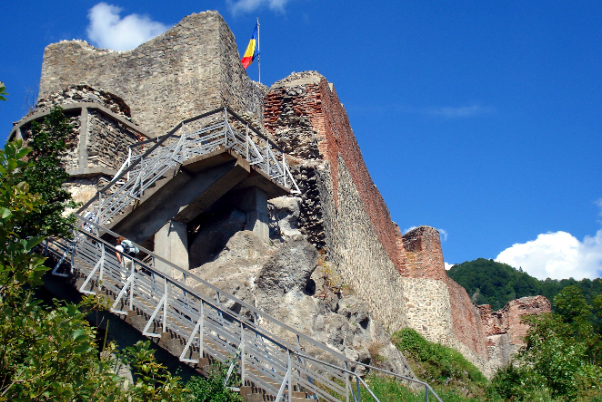
In the shadow of the Carpathian Mountains, perched precariously atop a rugged cliff, lies Poenari Castle, an evocative ruin that whispers tales of a turbulent past. Often overlooked in favor of the more famous Bran Castle, Poenari is arguably the true stronghold of the infamous Vlad the Impaler, the historical figure behind the Dracula legend.
The castle’s history is deeply intertwined with the storied past of Wallachia, a historical and geographical region of Romania. Initially constructed in the 13th century by the rulers of Wallachia, it wasn't until the 15th century that it gained prominence under the rule of Vlad III, also known as Vlad the Impaler. Vlad recognized the strategic importance of Poenari and transformed it into a formidable fortress. He is said to have forced nobles, who had opposed him, to labor in its renovation, enhancing its defenses and securing it as a bastion against Ottoman incursions.
Architecturally, Poenari Castle is a testament to medieval military ingenuity. Built on a steep cliff, it offered commanding views over the Argeș River valley, providing a natural defense against invaders. The structure, though now largely in ruins, still exhibits the stark, imposing design typical of the period. Its walls, constructed from stone, are a testament to the resilience of medieval craftsmanship, having withstood the ravages of time and nature. The remnants of towers and battlements hint at the castle's past grandeur and its strategic importance in the defense of Wallachia.
The local culture around Curtea de Argeș, the nearest town to Poenari, is rich and vibrant, reflecting centuries of tradition. The inhabitants, proud of their heritage, celebrate numerous festivals that pay homage to their history and folklore. One such festival is the Arges Autumn Festival, a yearly event marked by traditional music, dance, and crafts, offering visitors a glimpse into the region’s cultural tapestry. These celebrations are an opportunity to experience the warmth and hospitality of the Romanian people, who are eager to share their customs with curious travelers.
When it comes to gastronomy, the area around Poenari does not disappoint. Traditional Romanian dishes, heavily influenced by a blend of Balkan and Eastern European cuisines, dominate the local menu. Visitors should not miss trying sarmale (cabbage rolls stuffed with a mixture of meat and rice) or the hearty mici, skinless sausages grilled to perfection. In the cooler months, a bowl of ciorbă de burtă (tripe soup) offers a comforting warmth. To drink, țuică, a potent plum brandy, is a local staple, often served as a welcoming gesture.
While the castle is impressive, its lesser-known curiosities add layers to its allure. One fascinating story involves a tragic legend: the wife of Vlad the Impaler, who is said to have jumped to her death from the cliffs to escape the invading Ottomans, preferring death to capture. This haunting tale adds a layer of melancholy to the site and illustrates the dramatic history that unfolded within its walls. Additionally, the area is rich with wildlife; the lush forests surrounding the castle are home to bears and wolves, adding a touch of wilderness to the imposing landscape.
For those planning to visit, practical information is key to a rewarding experience. The best time to visit Poenari Castle is during the late spring or early autumn when the weather is mild, and the surrounding landscape is either lush and green or painted in autumnal hues. Reaching the castle requires a bit of effort: visitors must climb 1,480 steps to the top, a journey that is as rewarding as it is challenging. Comfortable shoes and water are essential, and it's wise to start early in the day to avoid the afternoon sun. Once at the top, the panoramic views of the surrounding mountains and valleys are nothing short of breathtaking.
In the end, Poenari Castle is more than just a ruin; it is a doorway into the past, a place where history, legend, and natural beauty converge. For those willing to venture off the beaten path, it promises an experience imbued with mystery, culture, and the indelible mark of history’s shadowy figures.