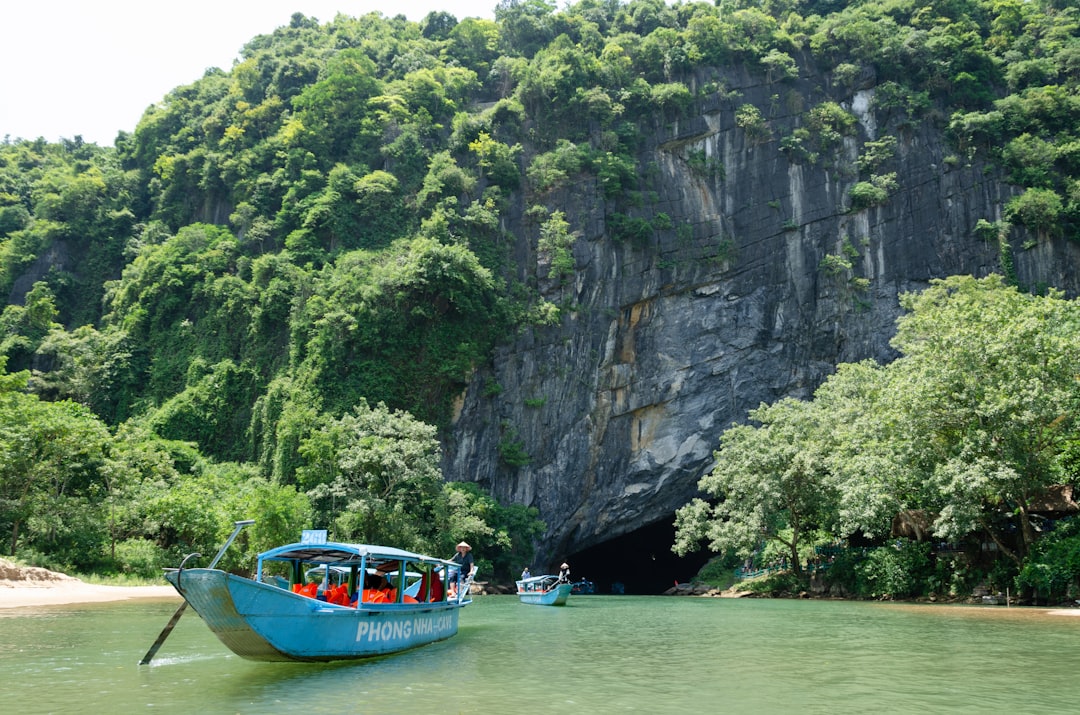

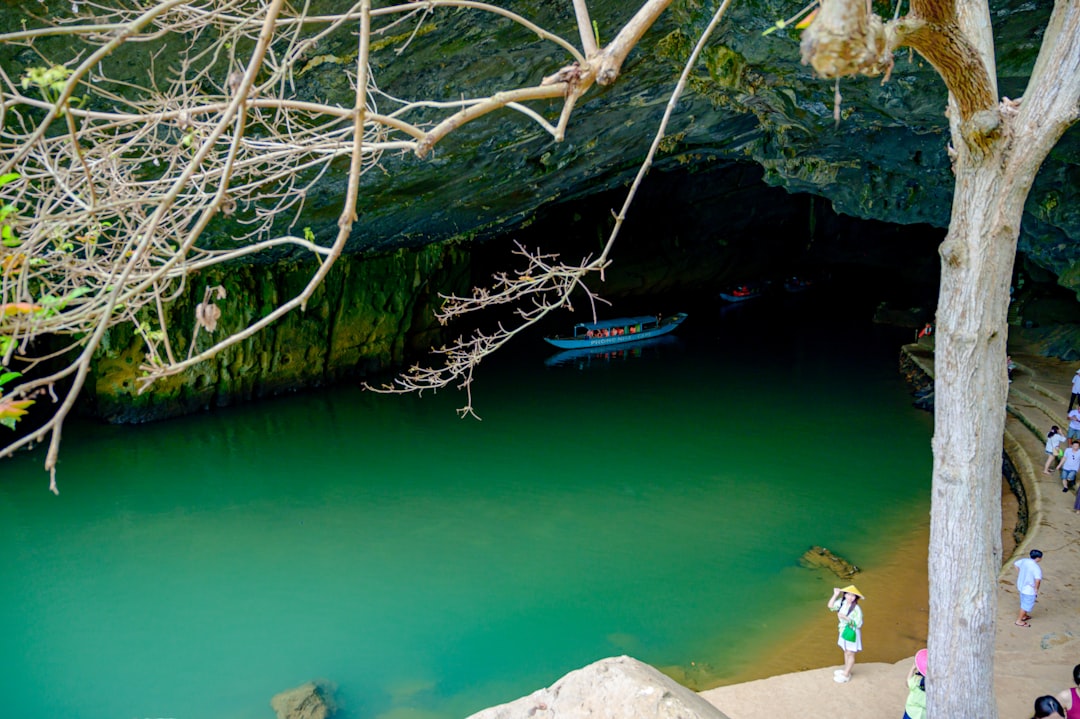
The sound of the oars slicing through the water of the Son River accompanies visitors for almost thirty minutes before the mouth of the cave opens before them like a door to another world. This is how one arrives at Phong Nha Cave, in the heart of Phong Nha-Kẻ Bàng National Park, in Quảng Bình province, in central Vietnam. There is no road, no path: only the river, the rowboats steered by locals, and the tropical vegetation slowly flowing along the sides.
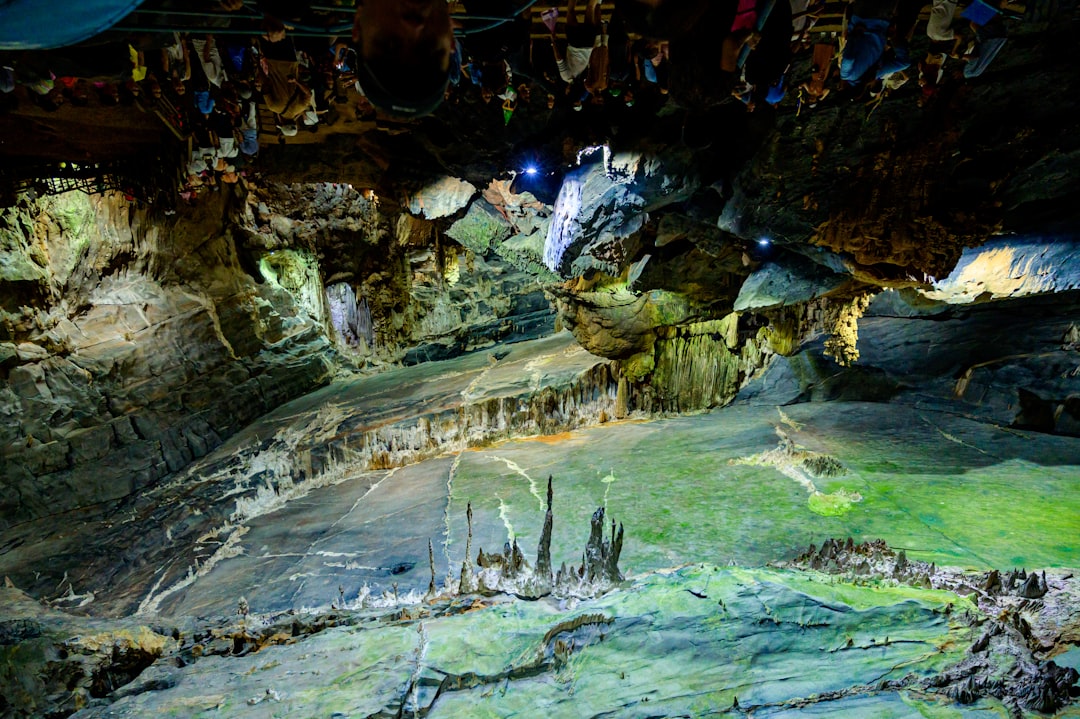
Recognized by UNESCO as a World Heritage Site in 2003, this cave is part of one of the oldest karst systems in Southeast Asia, formed about 400 million years ago. Yet, despite its proximity to the famous Son Doong — considered the largest cave in the world — Phong Nha remains surprisingly less crowded, offering a more intimate and secluded experience, without the crowds that often accompany the major natural sites of the region.
The journey on water: an experience even before the cave
The boat trip on the Son River is an integral part of the visit and should not be considered a simple transfer. The wooden boats glide between banks covered with bamboo and limestone karsts that rise vertically from the water, creating a landscape reminiscent of ancient Vietnamese prints. The silence is almost total, broken only by the splash of the oars and the calls of birds in the jungle.
The boatmen are almost always women from the village of Phong Nha, who guide tourists with a silent expertise acquired over generations. The starting point is the village itself, easily reachable from Đồng Hới, the nearest city with an airport, located about 50 kilometers to the south. From Đồng Hới, one can take a taxi, a local bus, or rent a motorcycle to reach the boarding dock.
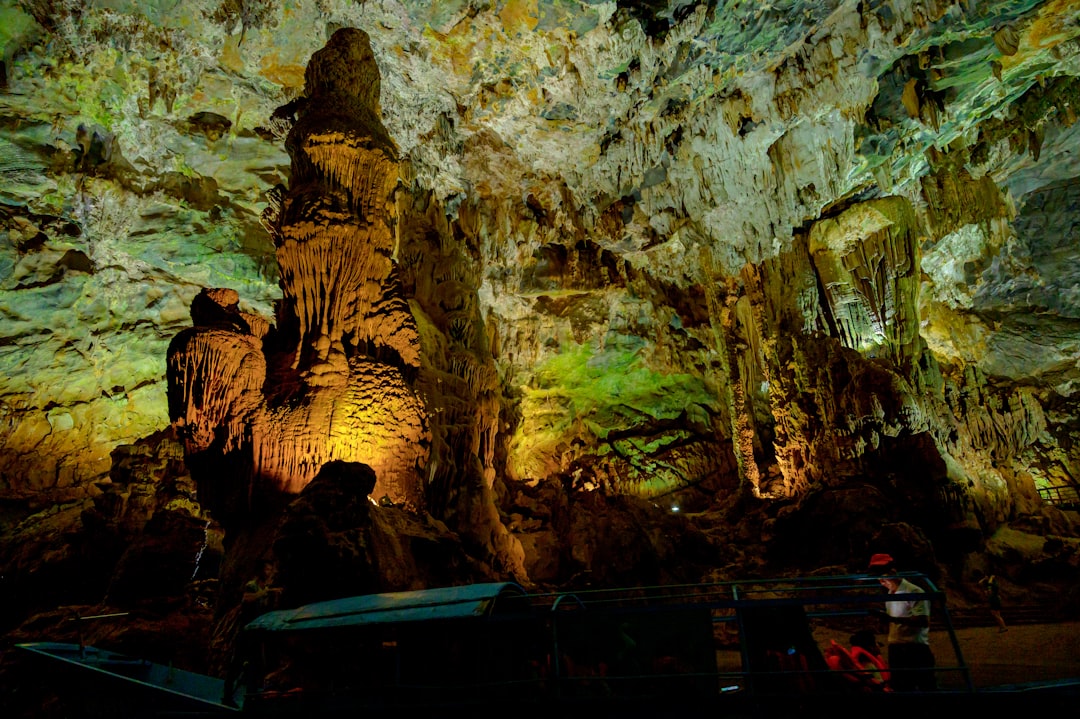
Inside the cave: illuminated stalactites and halls as tall as cathedrals
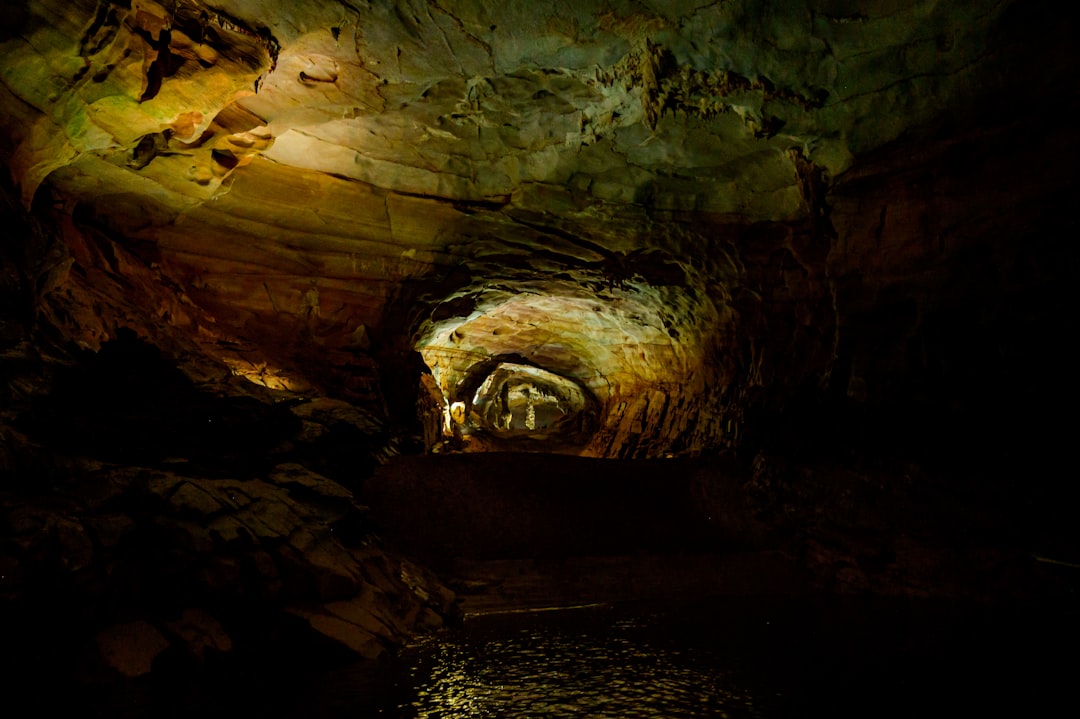
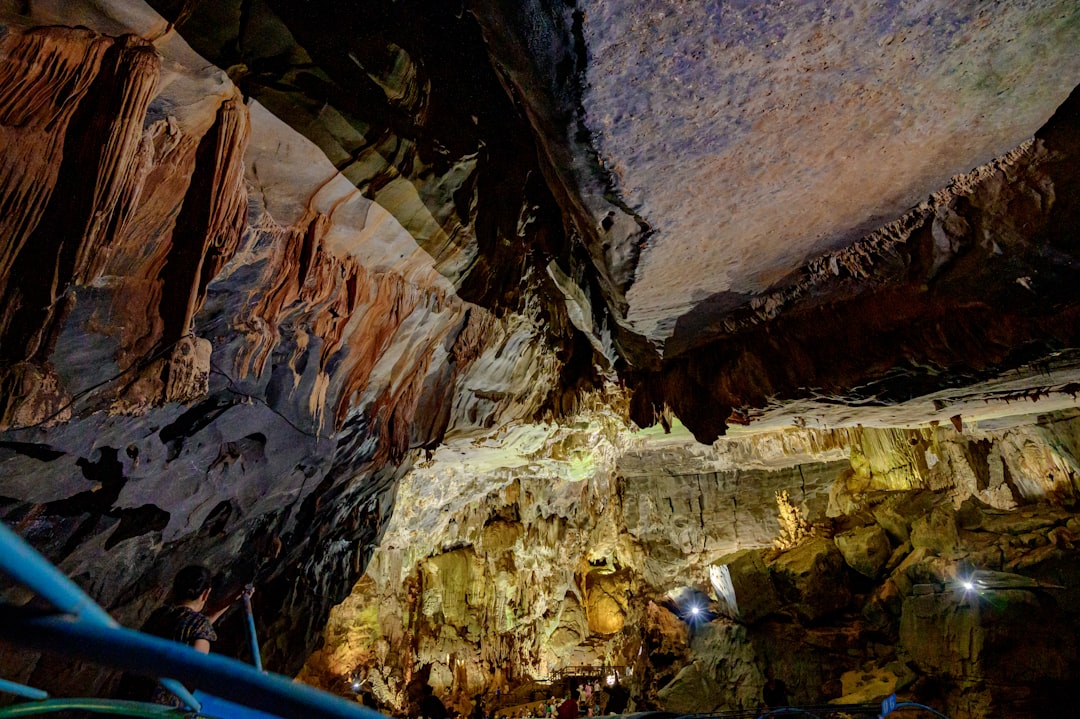
At the entrance of the cave, the temperature drops sharply and the air becomes humid and cool, an immediate relief from the outside heat. The interior is illuminated by colored lights — green, blue, orange — that cast dramatic shadows on the stalactites and stalagmites that hang and rise for dozens of meters. The main halls reach heights comparable to those of a Gothic cathedral, with vaults that disappear into the darkness beyond the reach of artificial lights.
The cave extends for about 7,729 meters in total, but the part accessible to tourists during the boat tour covers the first approximately 1,500 meters. In this stretch, it is possible to observe rock formations of extraordinary variety: columns that connect the ceiling and floor, petrified waterfalls of white calcite, and crystal-clear pools of water that reflect the lights like mirrors. The traditional Vietnamese names attributed to some formations — such as the Hall of the Dragon King — reveal the deep cultural and spiritual connection that local populations have with this place for centuries.
History and spirituality: a site revered for centuries
Phong Nha is not just a geological wonder: for centuries it has also been a sacred place. During the Cham kingdom period, between the 9th and 17th centuries, the cave was used as a Hindu temple, and some Cham inscriptions are still visible on the rocky walls near the entrance. This historical layer adds an unexpected dimension to the visit, transforming the cave into a palimpsest of overlapping meanings: natural, religious, cultural.
During the Vietnam War, the caves of the Phong Nha-Kẻ Bàng karst system were used as shelters and depots by the North Vietnamese army, attesting to their strategic importance as well as their scenic value. This recent history is part of the context that more attentive visitors can explore by visiting the small museum located in the park area.
Practical tips for an optimal visit
The best time to visit Phong Nha is between February and August, when the rains are less frequent and the level of the Son River allows regular access to the cave. From September to November, the region is subject to heavy rainfall that can cause temporary closure of the site. It is advisable to check the weather conditions before departing, especially in autumn.
The entrance ticket for the boat visit to Phong Nha Cave costs approximately 150,000-200,000 Vietnamese dong per person (about 6-8 euros), but the price may vary depending on the season and park policies. The complete visit, including the round trip boat ride and time inside the cave, lasts on average two hours. It is preferable to arrive early in the morning, by 8:30 AM, to avoid organized groups that tend to crowd the dock during the central hours of the day. Bringing a light but warm layer is a good idea: the temperature contrast between the tropical outside and the inside of the cave can be surprising.