
The North Cape, or Nordkapp, stands as a dramatic promontory where the Atlantic Ocean meets the Arctic Ocean, creating a breathtaking confluence of icy waters at the edge of Europe. This striking landscape has captivated explorers and travelers for centuries, evoking a sense of awe and adventure.
Historically, the allure of Nordkapp dates back to antiquity. The area was known to the ancient Greeks, who referred to it as "Ultima Thule," a distant place shrouded in mystery. The first recorded visit by a European was made by the Englishman Richard Chancellor in 1553, who sought a northeast passage. In the late 17th century, Italian priest Francesco Negri made the arduous journey to the cape, later describing it in his travelogues, which inspired others to follow. The area became more accessible in the 19th century as cruise tourism began, with tourists drawn to the dramatic cliffs and endless summer days.
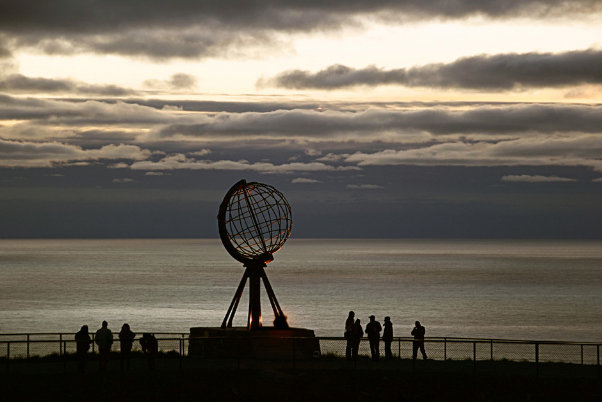
Architecturally, Nordkapp is marked by the famous Globe Monument, a simple yet iconic structure symbolizing the northernmost point of continental Europe. This steel globe, erected in 1978, has become a must-see for visitors who wish to capture the essence of their journey to the edge of the world. Nearby, the Nordkapphallen visitor center provides panoramic views and houses exhibits on the area's history, including an evocative multimedia presentation that brings the story of the cape to life.
The local culture of Western Finnmark is deeply influenced by the indigenous Sámi people, whose traditions and way of life are integral to the region. The Sámi are known for their vibrant handicrafts, such as duodji (traditional crafts), and their joik music, an ancient form of song that is both haunting and beautiful. Visitors often time their trips to coincide with cultural events like the Sámi Easter Festival, a celebration of Sámi music, art, and reindeer racing.
Nordkapp's gastronomy offers a taste of Arctic Norway's unique flavors. Seafood is a staple, with king crab, arctic char, and cod featuring prominently on local menus. Traditional dishes include boknafisk, a semi-dried fish that exemplifies the preservation techniques of the region, and reindeer stew, which highlights the importance of reindeer herding in Sámi culture. Wash it down with a glass of Akevitt, a traditional Norwegian spirit flavored with herbs, often enjoyed during festive occasions.
Among the lesser-known curiosities is the Knivskjellodden, a narrow peninsula that extends further north than the North Cape itself, though less accessible. Adventurous hikers can reach it via an 18-kilometer round trip, rewarded with the bragging rights of standing at the true northernmost point of mainland Europe. Another surprise is the North Cape Horn, a unique phenomenon where the sun does not set for over two months during the summer, providing endless daylight and surreal sunsets.
For practical visitor information, the best time to visit Nordkapp is during the midnight sun season, from mid-May to late July, when the sun hovers above the horizon, painting the sky in hues of gold and pink. Winter visits, while challenging due to cold and darkness, offer the magical allure of the Aurora Borealis. Dress warmly, as the Arctic winds can be biting, and consider joining a guided tour to learn more about the region’s history and natural phenomena. The visitor center provides ample information and amenities, including a café, gift shop, and post office for sending postcards from the top of the world.
Nordkapp is more than a geographical landmark; it's a place of profound natural beauty and cultural significance. Whether you're marveling at the midnight sun, tasting the rich flavors of the Arctic, or soaking in the storied history, the North Cape promises an unforgettable experience at Europe's northern edge.