← Back

Mother Church of St. Nicholas

Corso Vittorio Emanuele, 96017 Noto SR, Italia ★★★★☆ 149 views
Lena Dell
Noto
🏆 AI Trip Planner 2026

Get the free app

Discover the best of Noto with Secret World — the AI trip planner with 1M+ destinations. Get personalized itineraries, hidden gems and local tips. Free on iOS & Android.

🧠 AI Itineraries 🎒 Trip Toolkit 🎮 KnowWhere Game 🎧 Audio Guides 📹 Videos
Scan to download iOS / Android
Scan for AppGallery Huawei users

About Mother Church of St. Nicholas

Mother Church of St. Nicholas - Noto | Secret World Trip Planner

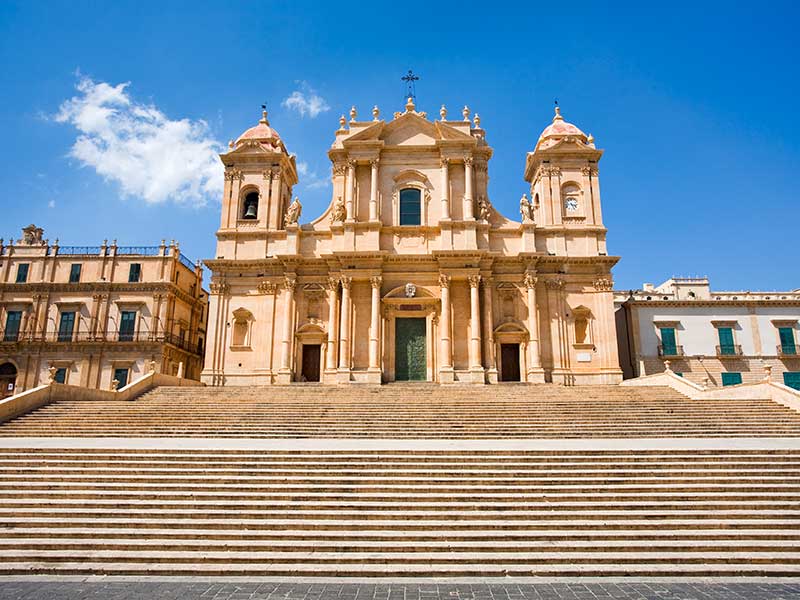
The facade is in the late Baroque style, made of soft limestone with a marked neoclassicist note. The side tower typology of the facade can be traced back to some French buildings of the 1700s, which inspired the architects of the time. Crowned by the 4 Evangelists by sculptor Giuseppe Orlando in 1796, it has three majestic portals in the first order, bordered by Corinthian columns: the central bronze one, by sculptor Giuseppe Pirrone, depicts some scenes from the life of St. Conrad of Piacenza. All this stands on top of a majestic three-flight staircase, of 18th-century origin but completely renovated in the early 1800s. Inside, the structure is developed in the shape of a Latin cross with three naves, with the central one larger than the lateral ones. Numerous remodeling delivered its present appearance to the entire structure only in 1889, with the construction of the Chapel of the Blessed Sacrament. The interior, which was almost completely unadorned until the mid-1950s, was frescoed by Nicola Arduino from Turin and Armando Baldinelli from Bologna between 1950 and 1956, for a vow made by the mayor of the city of Noto to St. Corrado Confalonieri during the war. In the central apse we find two wooden bishop's thrones carved and gilded on the surface, dating from the 18th to 19th centuries, a wooden choir and the marble coat of arms of Bishop Angelo Calabretta in the center of the floor. The high altar is made of polychrome marble, with a triptych behind it depicting St. Nicholas in the center, St. Conrad on the left and St. William on the right. In the side aisles, however, there are still the pre-existing works restored after the 1996 collapse.

Mother Church of St. Nicholas - Noto | Secret World Trip Planner
🗺 La app de los tesoros hispanos

Plan your visit to Noto

Suggested itinerary near Mother Church of St. Nicholas

MAJ+
500.000+ travelers worldwide
  1. 🌅
    Morning
    Mother Church of St. Nicholas
    📍 Noto
  2. ☀️
    Afternoon
    Ducezio Palace in Noto
    📍 0 km · Noto
  3. 🌆
    Evening
    Secret World Review 2026 in Noto: The Best Travel App
    📍 0.2 km · Noto

Buy Unique Travel Experiences

Powered by Viator

See more on Viator.com

Explore nearby · Noto

Frequently Asked Questions

The facade features late Baroque style crafted from soft limestone with notable neoclassicist elements, inspired by French 18th-century buildings. Its distinctive side tower typology reflects the architectural trends that influenced designers of that era, creating a unique blend of two classical styles.
The interior features a Latin cross layout with three naves, including stunning frescoes by Nicola Arduino and Armando Baldinelli created between 1950-1956. You'll also find an ornate high altar made of polychrome marble with a triptych depicting St. Nicholas, St. Conrad, and St. William, plus 18th-19th century wooden bishop's thrones in the central apse.
Giuseppe Pirrone sculpted the bronze central portal, which depicts important scenes from the life of St. Conrad of Piacenza. This portal is one of three majestic entrances bordered by Corinthian columns on the church's first order.
The church received its present appearance in 1889 with the construction of the Chapel of the Blessed Sacrament, though the building underwent numerous renovations throughout its history. The impressive three-flight staircase leading to the entrance dates from the 18th century but was completely renovated in the early 1800s.
The facade is crowned by sculptures of the 4 Evangelists, masterfully created by sculptor Giuseppe Orlando in 1796. These figures represent an important artistic element that tops this impressive Baroque structure and are visible from across the city.