
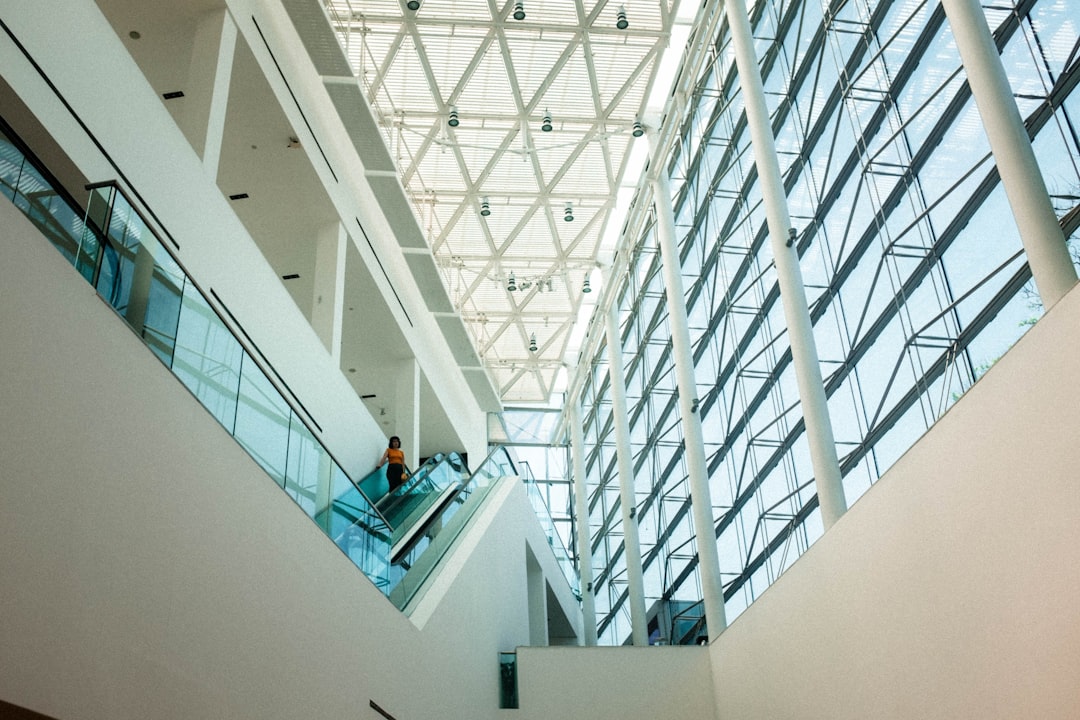
On Paseo del Bosque, in the elegant neighborhood of Palermo, the Latin American Art Museum of Buenos Aires — known to everyone as MALBA — houses one of the most significant collections of modern art on the entire American continent. The building, designed by the Argentine architecture firm Gastón Atelman, Martín Fourcade, and Alfredo Tapia and inaugurated in 2001, stands out for its glass and concrete facade that allows natural light to filter into the exhibition halls, creating a continuous dialogue between the internal space and the external city.
The museum was born from the vision of Argentine collector and entrepreneur Eduardo Costantini, who in the 1990s gathered hundreds of works by Latin American artists of the twentieth century with the aim of preserving them and making them accessible to the public. The permanent collection now includes over 220 works, including paintings, sculptures, and installations, covering a time span from the 1920s to the present day.
The permanent collection: a journey through Latin American modernism
The exhibition path develops on multiple levels and allows visitors to follow the evolution of Latin American art through movements such as Mexican muralism, surrealism, and geometric abstraction. Among the works most admired by visitors stands out “Abaporu” by Tarsila do Amaral, a Brazilian painter considered one of the founders of the Brazilian modernist movement. Painted in 1928, the painting depicts a human figure with distorted proportions and vibrant colors, and over time it has become one of the iconic symbols of the museum itself.
Alongside Tarsila do Amaral, the collection includes works by Frida Kahlo and Diego Rivera, the famous Mexican painters who brought the culture and politics of their country to the center of the international artistic debate. There is also a significant selection of works by Xul Solar, a visionary Argentine painter who mixed symbolism, abstraction, and references to astrology and esoteric philosophy, creating entirely original pictorial universes. His small panels, rich in details and saturated colors, require time and attention to be fully appreciated.
The temporary exhibitions and cultural programming
In addition to the permanent collection, MALBA dedicates ample space to temporary exhibitions that rotate regularly throughout the year. These exhibitions feature contemporary Latin American and international artists, keeping the museum in constant dialogue with the present. The cultural programming also includes film screenings, lectures, and meetings with artists, making MALBA a reference point not only for tourists but also for the local artistic community of Buenos Aires.
The museum's cinema is particularly appreciated: the hall hosts a showcase of Latin American and international auteur films, often difficult to find in commercial circuits. Checking the program on the official website before the visit allows for planning a complete cultural evening, combining a visit to the galleries with a screening.
Masterpieces not to be missed and how to navigate the rooms
For those visiting MALBA for the first time, it is useful to know that the rooms are organized chronologically and thematically. On the main floor, you will find the most famous works, including the room dedicated to magical realism and Latin American surrealism, where artists of different nationalities and styles coexist, united by a dreamlike vision of reality. The captions next to the works are written in Spanish and English, which facilitates understanding even for non-Spanish-speaking visitors.
Particularly striking is the zenithal light that illuminates some of the central rooms: thanks to the glass structure of the ceiling, natural light changes throughout the day, altering the perception of colors in the displayed works. Those who can should visit the museum in the morning hours, when the light is softer and the rooms are less crowded.
Practical Information for the Visit
The MALBA is located at Avenida Figueroa Alcorta 3415, in the Palermo neighborhood, easily reachable by taxi, bus, or on foot from the Plaza Italia subway station. The museum is open every day except Tuesday, with hours varying between morning and evening. The full ticket price is around 2,000-3,000 Argentine pesos, with discounts for students and seniors, but it is advisable to check the updated prices on the official website as they may vary due to local inflation.
The average visit time is about two hours for the permanent collection alone, but those who wish to delve deeper can easily spend three hours or more. Inside the museum, there is a café with a terrace that offers a pleasant break during the visit, and a bookstore specializing in Latin American art where you can purchase catalogs and publications that are hard to find elsewhere. Avoid weekend afternoons when the museum is more crowded with families and organized groups.