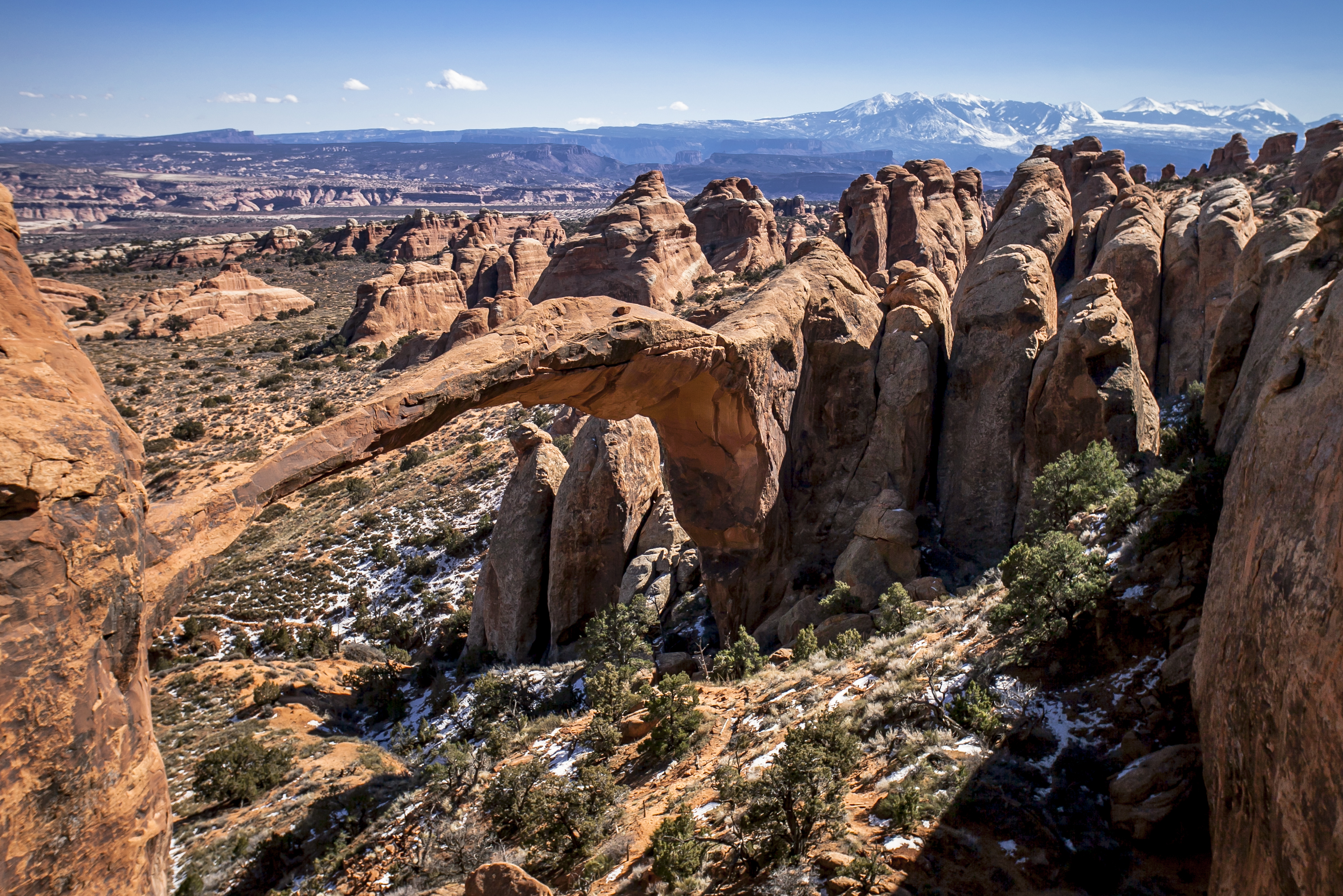

In the heart of Arches National Park, Utah, a natural wonder awaits those who venture into its rocky embrace—the magnificent Landscape Arch. Stretching across an impressive 306 feet, this is the longest natural rock arch in North America and a breathtaking testament to the erosive power of nature. This delicate stone giant is a marvel of geology, captivating visitors with its slender grace and the sheer improbability of its existence.
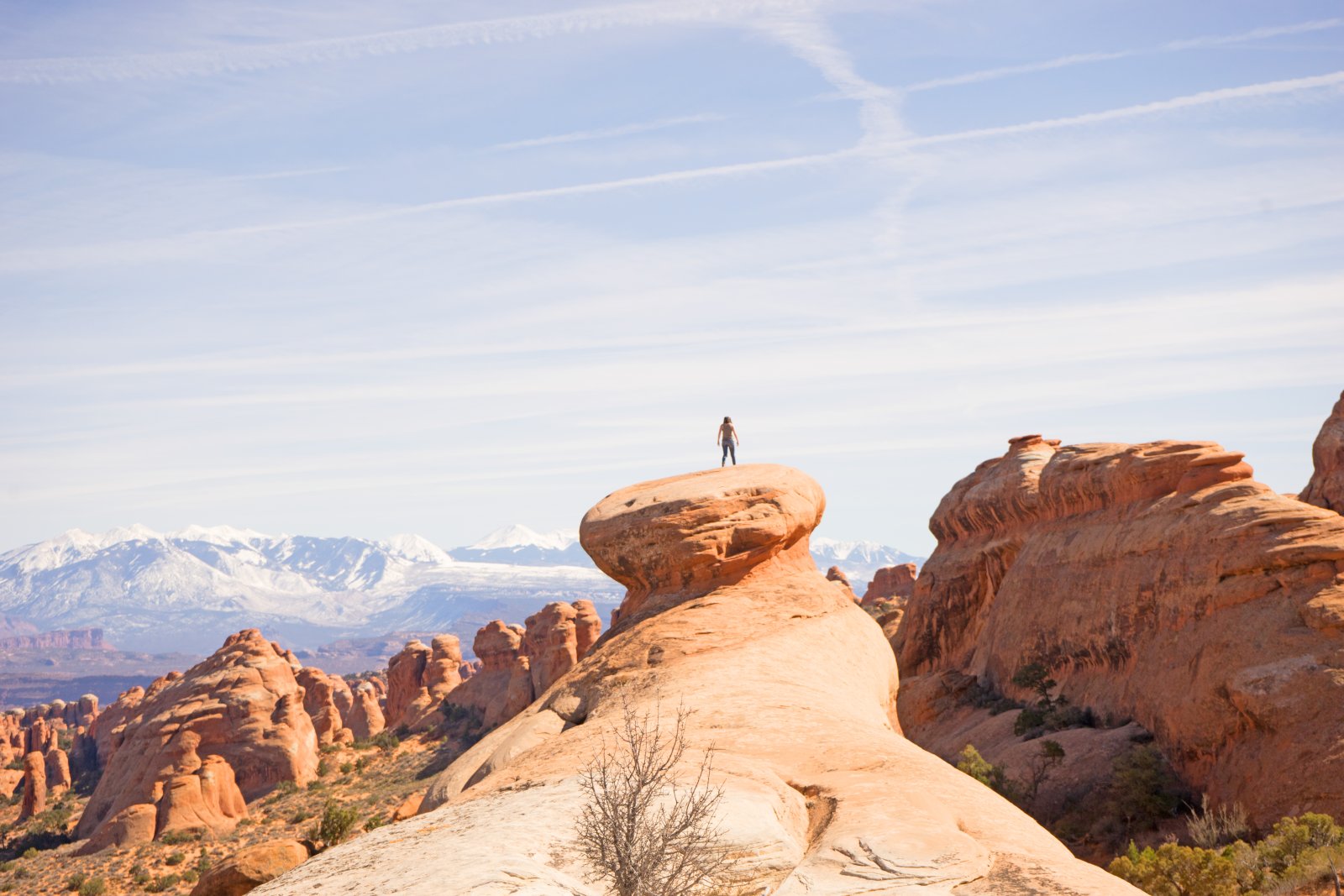
Landscape Arch is a product of millions of years of geological sculpting. The park's iconic red rocks, including this arch, are primarily composed of Entrada Sandstone, deposited around 150 million years ago when the area was a vast desert. Over eons, water seeped into the sandstone, freezing and thawing with the changing seasons. This process gradually widened cracks and led to the formation of arches and other rock formations seen today. While the arch itself is a relatively recent creation in geological terms, its history is a continuation of the ancient, ever-changing landscape of the Colorado Plateau.
In terms of art and architecture, the arch's natural elegance stands as a masterpiece of Mother Nature's artistry. Unlike man-made structures, which rely on symmetry and design, Landscape Arch's beauty lies in its imperfection and fragility. Its thin, sweeping curve seems almost too delicate to bear its own weight and yet has persisted through countless cycles of erosion. The arch has inspired countless artists and photographers, who flock to capture its ethereal beauty against the backdrop of Utah's azure skies. While it may not be a product of human hands, its artistic significance is undeniable.
The area surrounding Landscape Arch is steeped in the local culture and traditions of the Native American tribes who have called this region home for centuries. The Navajo, Hopi, and Ute tribes have rich histories connected to the land. They view such formations with reverence, considering them sacred places imbued with spiritual significance. Though specific festivals directly tied to the arch may not exist, the broader cultural tapestry of the region is rich with traditions that celebrate the interconnectedness of people, land, and sky.
When it comes to gastronomy, the small town of Moab, the gateway to Arches National Park, offers a taste of local flavors that complement the natural splendor. While traditional Native American dishes are not widely available in commercial eateries, the influence of the region can be tasted in dishes that use local ingredients like Navajo lamb, juniper berries, and blue corn. Moab's dining scene is eclectic, with offerings ranging from hearty Southwestern fare to innovative vegan cuisine, making it a delightful stop for food enthusiasts exploring the park.
Among the lesser-known curiosities about Landscape Arch is the fact that it has undergone significant changes in recent history. In 1991, a large slab fell from the underside of the arch, a stark reminder of its fragility. This event caused the park to close the trail beneath the arch to ensure visitor safety. Another fascinating detail is that, despite its fame, many visitors miss the nearby smaller arches, such as Partition Arch and Navajo Arch, which can be found on the same trail and offer their unique beauty.
For those planning a visit, the practical visitor information is crucial to making the most of this natural wonder. The best time to visit is during the cooler months of spring (April to May) and fall (September to October) when the temperatures are milder, and the crowds thinner. An early morning hike to Landscape Arch is recommended to enjoy the serene beauty before the midday sun and visitors arrive. The Devils Garden Trailhead, located at the end of the park's main road, serves as the starting point for the 1.6-mile round-trip hike to the arch. Visitors should carry plenty of water, wear sturdy shoes, and be prepared for the high desert climate.
As you stand before Landscape Arch, its slender span cutting across the sky, take a moment to appreciate the silent testament it offers to the inexorable passage of time and the delicate balance of nature. This arch, like all natural wonders, reminds us of our fleeting place in the grand tapestry of the Earth and the importance of preserving these treasures for generations to come.