




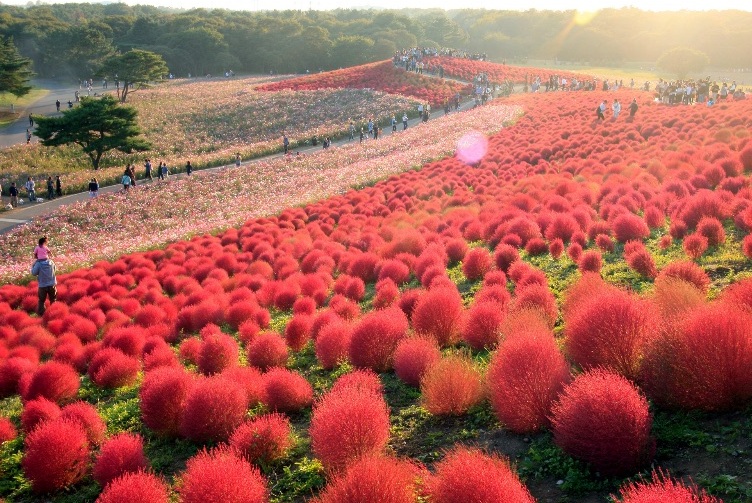
Nestled within the serene landscapes of the Kanto Plain, Hitachi Seaside Park in Ibaraki Prefecture is a kaleidoscope of natural beauty, offering visitors a chance to experience Japan's floral splendor beyond the cherry blossoms. A mere two-hour journey from the bustling streets of Tokyo, this park is a breathtaking escape that remains relatively undiscovered by international tourists.
History and Origins
The origins of Hitachi Seaside Park date back to its days as a military airfield during World War II. Following the war, the land was repurposed into a vast public park, officially opening in 1991. Its transformation from a site of conflict to one of tranquility is a testament to the area's resilience and dedication to peace and preservation. Today, the park spans over 350 hectares, with each section meticulously designed to showcase the changing seasons and Japan's rich botanical heritage.
Art and Architecture
While the park is primarily known for its natural beauty, its architectural elements also contribute to its charm. The Glass House, designed by the renowned architect Itsuko Hasegawa, serves as an elegant entry point to the park. Its transparent structure harmonizes with the surrounding landscape, offering a seamless transition from the man-made to the natural. Throughout the park, art installations and sculptures are strategically placed, enhancing the visitor's experience by blending art with nature.
Local Culture and Traditions
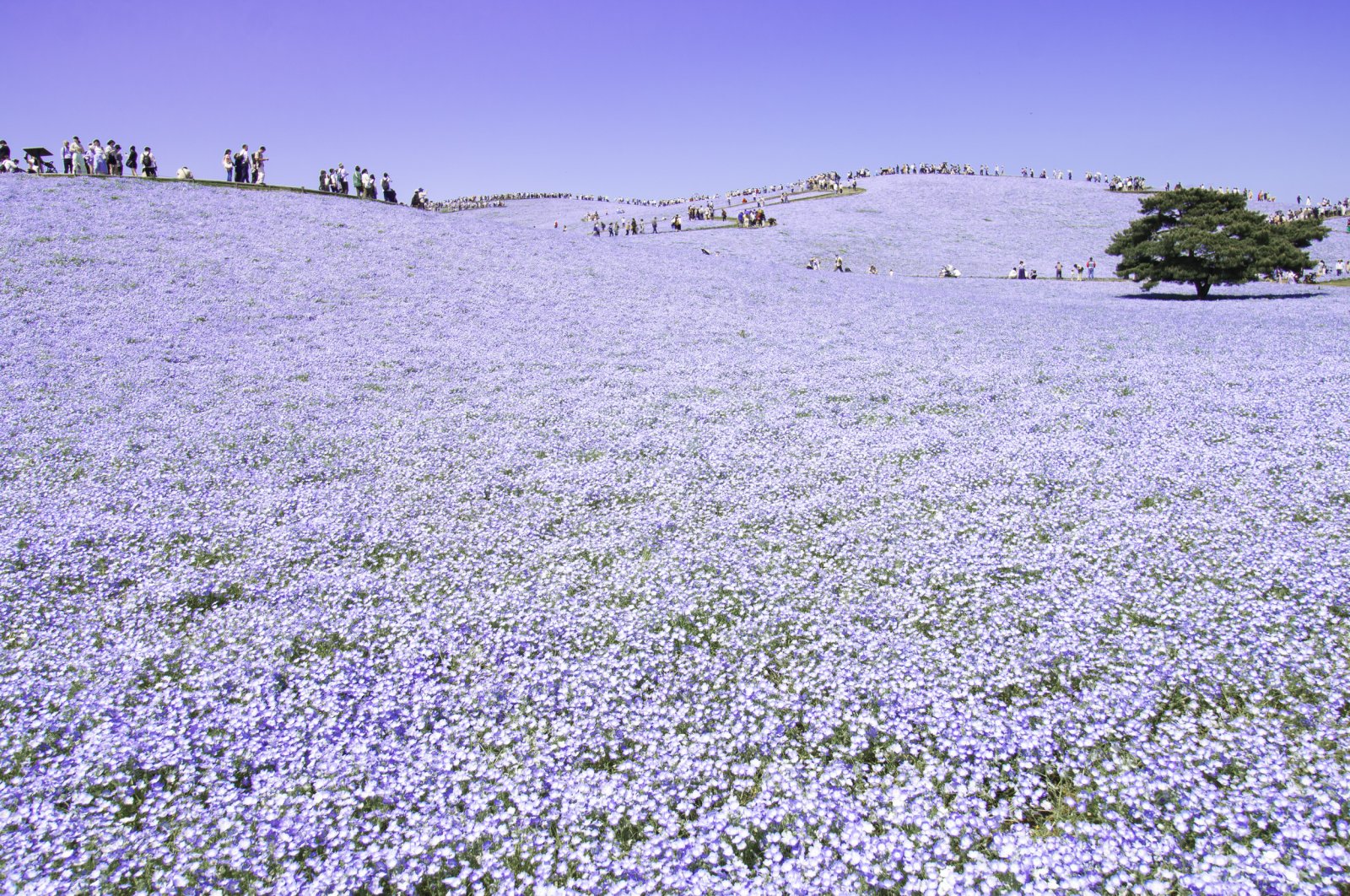
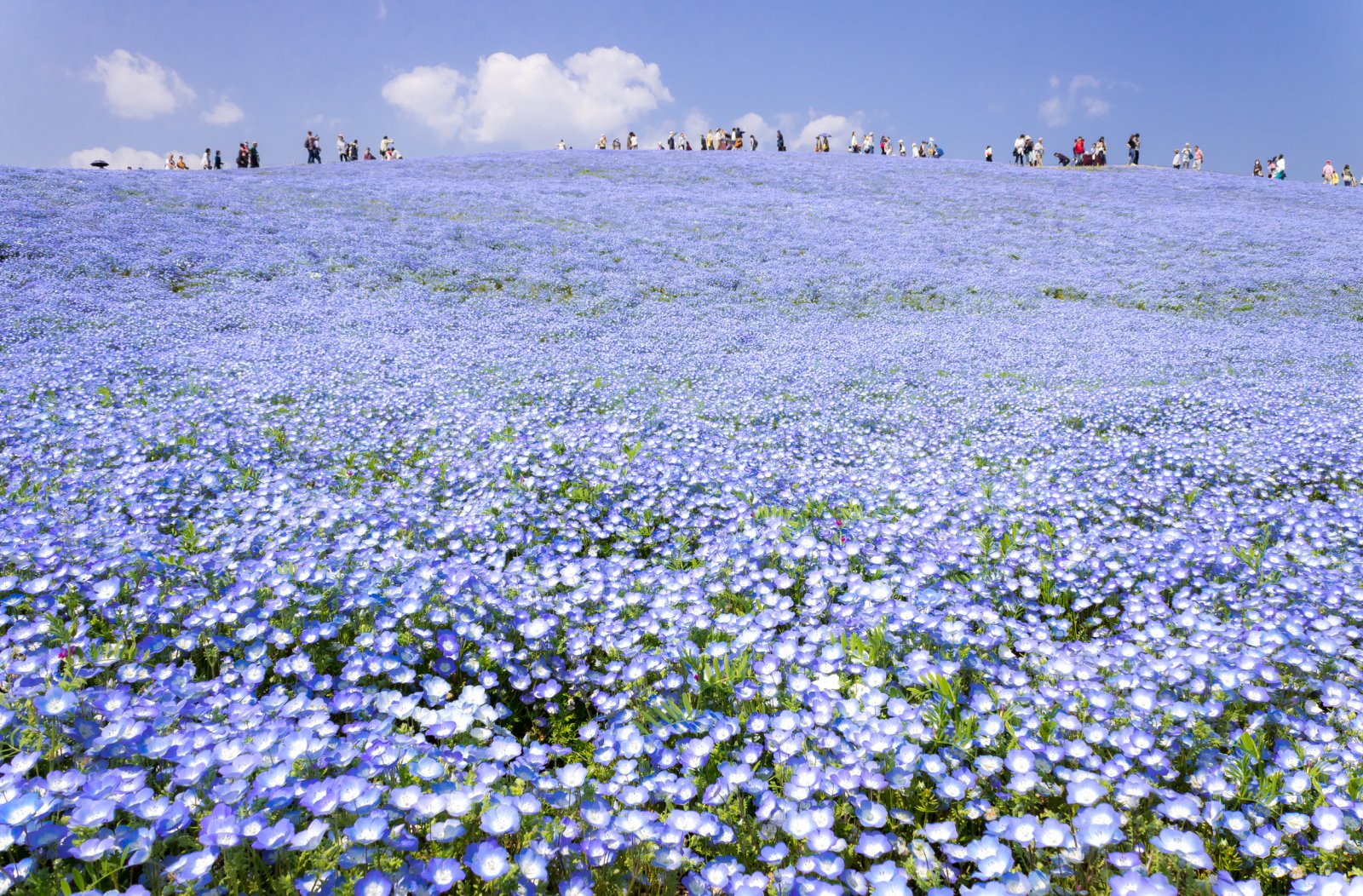
The park hosts a variety of festivals throughout the year, each reflecting the local culture and seasonal changes. One of the most anticipated events is the Nemophila Harmony Festival, held in late April to mid-May, when over 4.5 million baby blue eyes (Nemophila flowers) blanket the hillside in a sea of vibrant blue. The park also celebrates the Kochia Carnival in autumn, where the hills are set ablaze with the fiery reds of the kochia plants. These festivals highlight the Japanese appreciation for seasonal beauty and their deep connection with nature.
Gastronomy
A visit to Hitachi Seaside Park wouldn't be complete without sampling the local culinary delights. Ibaraki is known for its natto, a traditional Japanese food made from fermented soybeans, which might be an acquired taste but is beloved for its unique flavor and health benefits. Visitors can also enjoy Hitachi beef, a premium wagyu beef from the region, known for its tenderness and rich taste. Local cafes and food stalls within the park offer these delicacies, providing a taste of Ibaraki's culinary heritage.
Lesser-Known Curiosities
One intriguing aspect of the park is the Miharashi Hill, which changes color dramatically with each season—from the azure blues of Nemophila in spring to the lush greens of summer, and finally, the vibrant reds of kochia in autumn. Few realize that beneath this visual spectacle lies a commitment to sustainability; the park employs eco-friendly practices to maintain its landscapes, including the use of natural fertilizers and integrated pest management.
Practical Visitor Information
The best time to visit Hitachi Seaside Park depends on your floral interests. Spring and autumn are particularly popular due to the Nemophila and Kochia displays. Arriving early in the day ensures a more peaceful experience, especially during peak bloom times. The park is easily accessible via public transport; take the JR Joban Line to Katsuta Station, followed by a short bus ride to the park entrance. Within the park, bicycles can be rented, offering a leisurely way to explore its vast expanses.
In summary, Hitachi Seaside Park is a hidden gem that offers a vivid tapestry of seasonal flowers, a touch of modern architecture, and a taste of local culture. Whether you're a nature enthusiast, a history buff, or a culinary explorer, this park provides a serene and enriching escape from the urban hustle of nearby Tokyo. So pack your camera and your curiosity, and discover the floral paradise that awaits in Ibaraki.