

The Great Mosque of Xi'an, founded in 742, is the oldest mosque in China and a striking example of the fusion between Chinese architectural styles and Islamic function. Spanning over 12,000 square meters, this mosque stands out because it is designed entirely in traditional Chinese architectural style, distinguishing it from the typical Islamic architectural forms seen in the Middle East and North Africa.
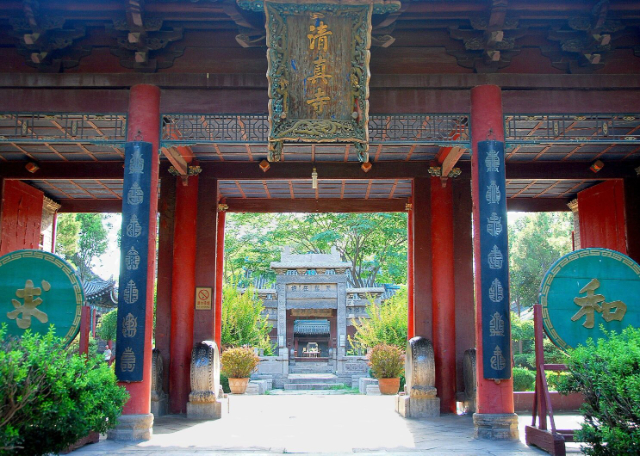
The mosque is structured as a walled complex consisting of five courtyards, a traditional Chinese layout that promotes a serene and orderly progression towards the sanctity of the prayer hall located in the fourth courtyard.
Each courtyard features its own unique elements, such as intricate pavilions, archways, and lush green gardens that enhance the tranquility and spiritual atmosphere of the environment.
Inside, the ancient interiors are adorned with detailed woodwork and classic Chinese decor, including inscriptions and artworks that blend Islamic calligraphy with Chinese design.
This combination not only highlights the mosque's religious importance but also showcases the historical Silk Road's impact on cultural exchange.
Today, the Great Mosque of Xi'an remains a significant cultural and religious site, reflecting centuries of Islamic heritage in China and serving as a symbol of the historical blending of different civilizations. It continues to be a place of worship for the Muslim community in Xi'an and a fascinating site for visitors interested in the confluence of culture and religion.