
← Back

Ear of Dionysus.

Provincia di Siracusa, Italia ★★★★☆ 167 views
Marika Nuur
Provincia di Siracusa
🏆 AI Trip Planner 2026

Get the free app

Discover the best of Provincia di Siracusa with Secret World — the AI trip planner with 1M+ destinations. Get personalized itineraries, hidden gems and local tips. Free on iOS & Android.

🧠 AI Itineraries 🎒 Trip Toolkit 🎮 KnowWhere Game 🎧 Audio Guides 📹 Videos
Scan to download iOS / Android
Scan for AppGallery Huawei users

About Ear of Dionysus.

Ear of Dionysus. - Provincia di Siracusa | Secret World Trip Planner

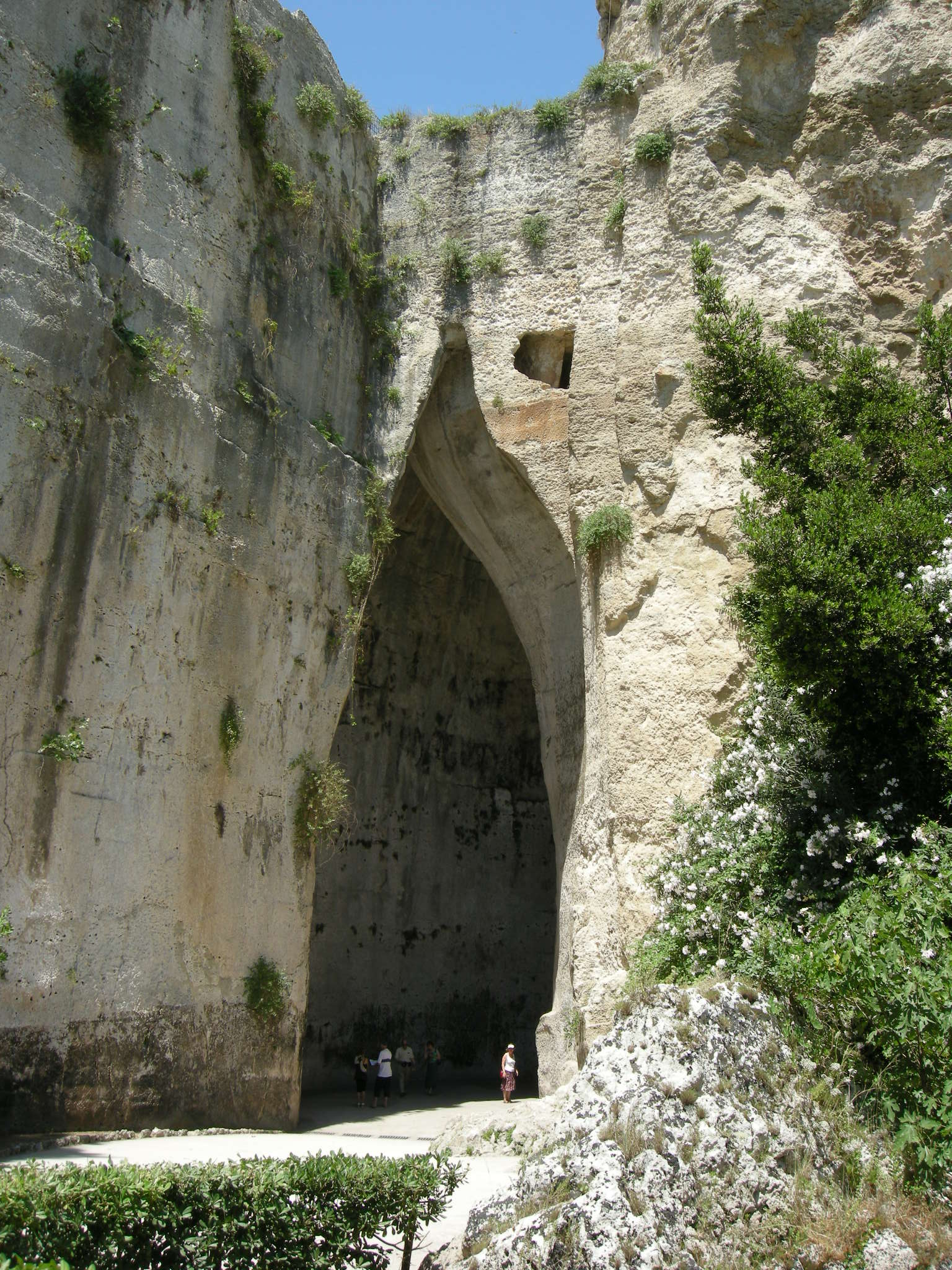
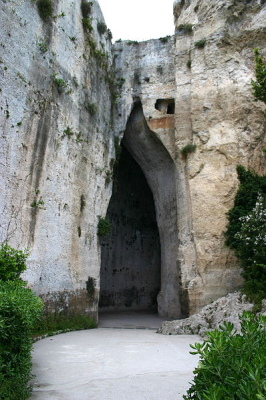
The Ear of Dionysus is an artificial, funnel-shaped cave, carved into the limestone, about 23 m. high and 5 to 11 m. wide, with a singular shape, vaguely resembling an ear pavilion, that develops 65 m. deep, with an unusual S-shaped course and sinuous walls that converge at the top, in a singular acute arch. The cave is, moreover, endowed with exceptional acoustic properties (sounds are amplified up to 16 times).
Ear of Dionysus. - Provincia di Siracusa | Secret World Trip Planner

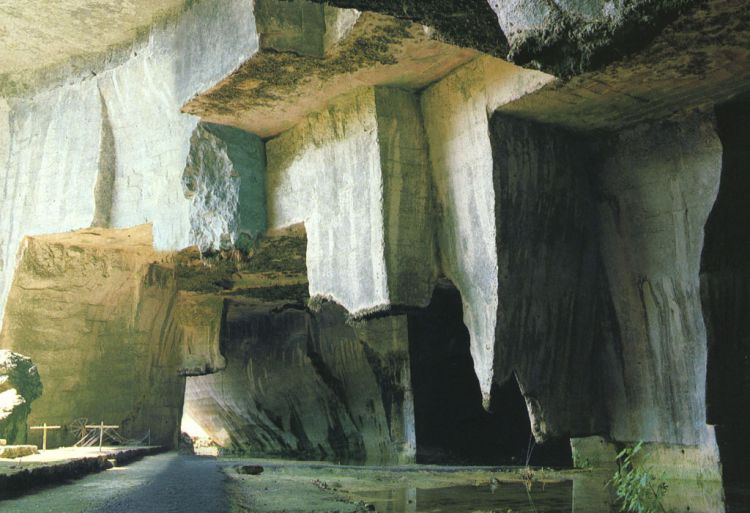
These acoustic characteristics and shape prompted Michelangelo di Caravaggio, who visited Syracuse in 1608 in the company of the Syracuse historian Vincenzo Mirabella, to name it the Ear of Dionysius, thus giving force to the 16th-century legend that the famous tyrant Dionysius had this cave built as a prison and locked his prisoners in it to hear, from an opening from above, the words magnified by the echo. In fact, although to the detriment of suggestion and legend, it is worth knowing that the shape of the cave is simply due to the fact that the excavation began from above, following the bottom plane of a serpentine aqueduct, and went wider and wider in depth, as an excellent quality of rock was found. Proof of this on the walls are clearly observable traces of the stone quarrymen's work tools and, in a horizontal direction, the detached planes of the extracted blocks.

Ear of Dionysus. - Provincia di Siracusa | Secret World Trip Planner
🗺 La app de los tesoros hispanos

Plan your visit to Provincia di Siracusa

Suggested itinerary near Ear of Dionysus.

MAJ+
500.000+ travelers worldwide
  1. 🌅
    Morning
    Ear of Dionysus.
    📍 Provincia di Siracusa
  2. ☀️
    Afternoon
    Siracusa: Piazza Duomo - The Awakening by Seward Johnson
    📍 0 km · Provincia di Siracusa
  3. 🌆
    Evening
    Syracuse | Umbertino Bridge
    📍 1.2 km · Provincia di Siracusa

Buy Unique Travel Experiences

Powered by Viator

See more on Viator.com

Explore nearby · Provincia di Siracusa

Frequently Asked Questions

The cave was named the Ear of Dionysus by Michelangelo Caravaggio during his 1608 visit to Syracuse, inspired by its funnel-shaped appearance resembling an ear pavilion. The name was reinforced by a 16th-century legend claiming the tyrant Dionysius built it as a prison to eavesdrop on inmates through amplified sounds from above.
The cave possesses exceptional acoustic properties where sounds are amplified up to 16 times, thanks to its unique S-shaped course and sinuous walls that converge at the top in an acute arch. This remarkable amplification is due to the funnel-like shape that naturally funnels and magnifies sound waves.
The artificial cave carved into limestone is approximately 23 meters high, between 5 to 11 meters wide at various points, and extends 65 meters deep. Its distinctive S-shaped course and narrowing walls that meet at the top create its characteristic ear-like appearance.
Contrary to the legend of Dionysius building it as a prison, the cave was actually created through stone quarrying that began from above, following an ancient aqueduct's bottom plane. Evidence of this is visible in the tool marks and detached stone planes on the walls where quarrymen extracted blocks as they found higher quality rock at greater depths.
Visitors can see the distinctive S-shaped passage with sinuous converging walls that create the ear-like silhouette, as well as clear traces of ancient stone quarrying tools marked on the walls. The horizontal detached planes visible on the surfaces show where large blocks were extracted during the cave's excavation.