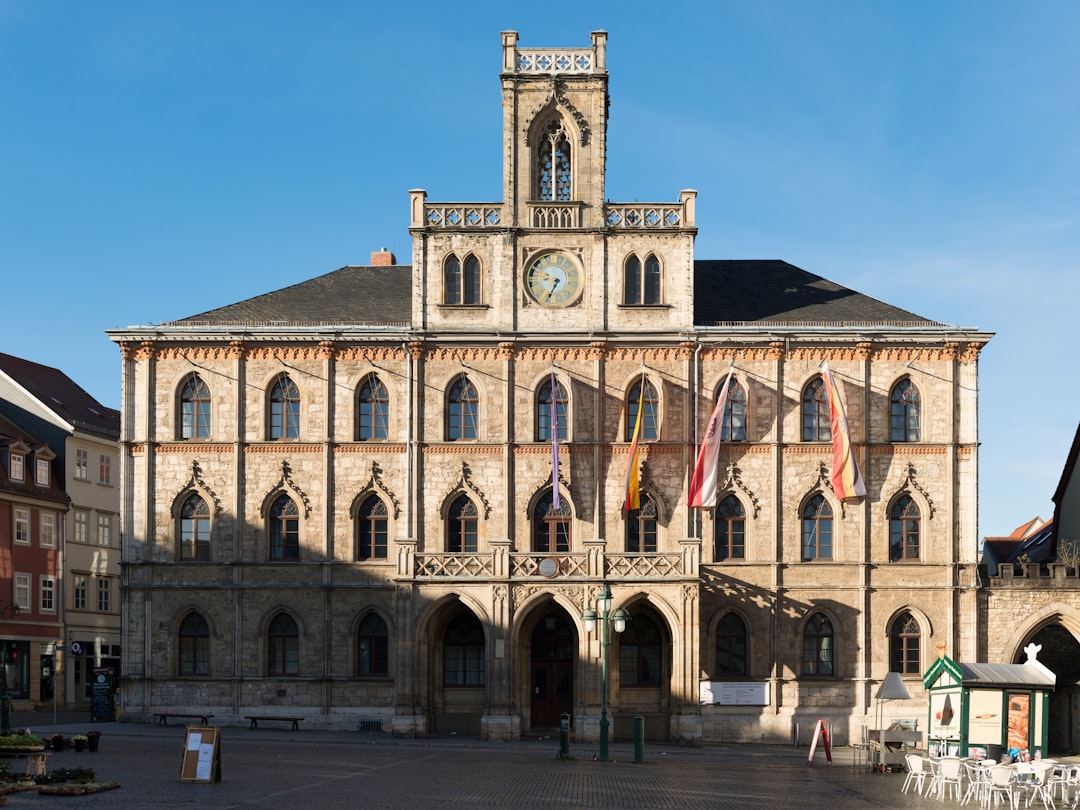

Weimar, a gem located in the heart of Thuringia, is a city that embodies the richness of German culture. Known as the home of great literary figures such as Johann Wolfgang von Goethe and Friedrich Schiller, Weimar is a place where history and art intertwine in extraordinary ways. This urban center, with a population of about 65,000 inhabitants, is a landmark for those wishing to explore Germany's cultural and historical heritage.
The city is famous not only for its literary past but also for its crucial role during the Enlightenment and the founding of the Bauhaus, the artistic movement that revolutionized design and architecture. Visiting Weimar means immersing oneself in a context that has profoundly influenced European culture.
Historical and Cultural Context
Weimar has a rich and complex history. It was the cradle of the Weimar Republic, where in 1919 the first democratic constitution of Germany was signed, an event that marked a fundamental turning point in the country's history. This period is characterized by unprecedented cultural ferment, which saw the birth of important artistic and literary movements. The city was the hub of Weimar Classicism, a time when Goethe and Schiller produced some of their most famous works.
Moreover, Weimar was an important musical center in the 19th century, thanks to composers like Franz Liszt. Its cultural heritage is further enriched by the presence of artists and architects who, in the 20th century, gave life to the Bauhaus school, an institution that left an indelible mark on the world of modern design. Today, Weimar is recognized as a UNESCO World Heritage site, a recognition that underscores its historical and cultural significance.
What Impresses About the Place
The beauty of Weimar manifests in every corner of its Old Town. Strolling through its streets, one can admire beautifully preserved historic buildings, such as Goethe's House and the National Theatre. These places not only tell the story of the city but also offer a glimpse into German architecture through the centuries. Each building is a piece of a cultural puzzle that makes Weimar unique.
Another must-see attraction is the Belvedere Park, an example of an English garden that hosts splendid palaces and statues celebrating history and art. The combination of nature and architecture makes this place ideal for a relaxing walk, offering moments of reflection and beauty. The city is a true open-air museum, where every step tells a story.
Visiting Experience
Visiting Weimar is an experience that engages all the senses. Visitors can participate in guided tours that provide insights into the lives and works of Goethe and Schiller, allowing for a better understanding of the historical context in which they operated. Additionally, the city hosts cultural events and festivals that celebrate its artistic heritage, making each visit unique and memorable.
The local cuisine is another aspect not to be overlooked. The restaurants and cafes in Weimar offer traditional dishes that reflect German culture, allowing visitors to savor the authentic flavors of the region. From the famous Weimar cake to meat-based dishes, every meal is an opportunity to immerse oneself in the local culture.
Practical Information for Visitors
Weimar is easily accessible thanks to its central location in Germany, with efficient train connections from cities like Erfurt and Jena. Once in the city, visitors can explore the Old Town on foot, which is well-preserved and accessible. For those wishing to deepen their visit, audio guides and informative maps are available at tourist points.
It is advisable to plan the visit in advance, especially during peak seasons, to ensure that you do not miss the main attractions. Finally, for those seeking further information and tips on what to see and do in the city, the Secret World app can be a valuable ally in discovering every corner of Weimar.