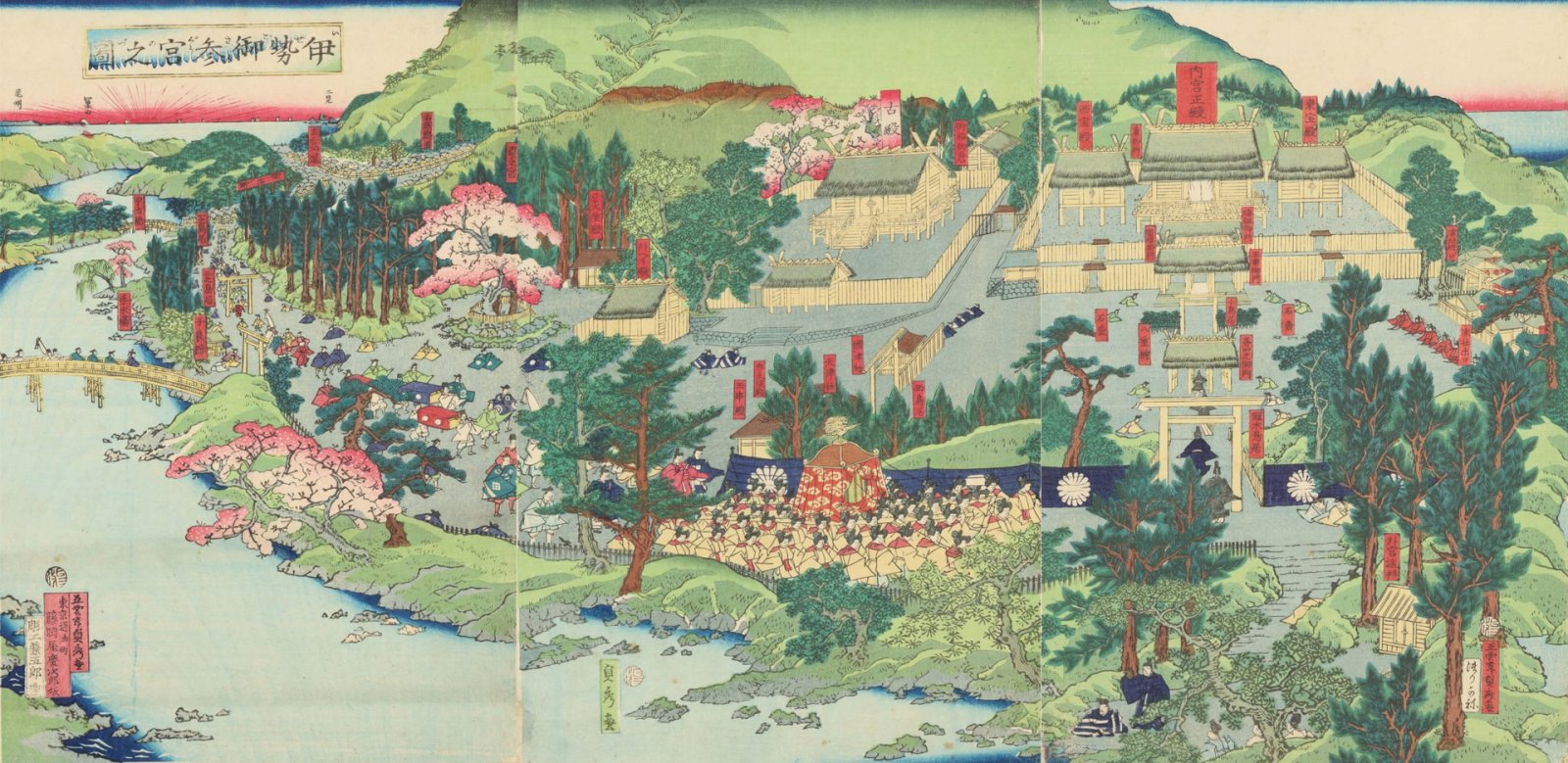

In the heart of Mie Prefecture, the city of Ise hosts one of the most sacred places in Japan: the Ise Shrine, known for its importance in Shinto worship. This site is considered the home of the Sacred Mirror of the Emperor, a symbol of power and divinity in Japanese tradition. Every year, millions of pilgrims and tourists visit Ise to pay homage to this place of great spiritual and cultural significance.
The Ise Shrine is not only a place of worship but also an extraordinary example of traditional Japanese architecture. Its simple and natural beauty, along with its millennia-old history, make it a must-visit destination for those wishing to immerse themselves in Japanese culture. The construction of the shrine, which occurs every 20 years, represents a cycle of renewal and continuity, reflecting the Shinto philosophy of respect for nature and the cycles of life.
Historical and Cultural Context
The Ise Shrine, known as Ise Jingu, consists of two main shrines: Naiku and Geku. Naiku is dedicated to the goddess Amaterasu, the sun deity and progenitor of the imperial family, while Geku is dedicated to Toyouke no Omikami, the deity of harvest. The veneration of these deities dates back centuries, and the shrine is considered the spiritual center of the Shinto religion, which is an integral part of Japanese culture.
The history of the Ise Shrine is intrinsically linked to Japanese history, with its origins lost in the mists of time. Every 20 years, the shrine is rebuilt using the same traditional techniques, a process that symbolizes rebirth and the importance of tradition. This event not only reflects respect for history but also the desire to maintain a connection with the sacred.
What Impresses About the Place
What impresses most about the Ise Shrine is its incredible harmony with the surrounding environment. Nestled in a cypress forest and surrounded by an atmosphere of tranquility, the shrine offers a unique contemplative experience. The wooden structures, built with natural materials, blend perfectly with the landscape, creating a sense of peace and serenity that envelops visitors.
The simplicity of the architecture, characterized by clean lines and essential forms, expresses the beauty of Japanese minimalism. Every detail, from the arrangement of spaces to the materials used, is designed to reflect the sacredness of the place. A visit to the shrine is an experience that invites reflection and connection with spirituality, making every moment spent here memorable.
Visiting Experience
Visiting the Ise Shrine is an experience that engages all the senses. Upon entering, visitors are welcomed by a large torii, a symbol of passage to the sacred. Once inside, one can walk the paths leading to the various temples, immersing in the beauty of nature and the serenity of the place. The purification practice, which involves washing hands and mouth, is a rite that prepares pilgrims to approach the sacred.
During the visit, it is possible to witness Shinto ceremonies and rituals, offering an authentic glimpse into Japanese culture. Additionally, the local market of Oharai-machi, located nearby, is a great place to savor culinary specialties and purchase traditional souvenirs, making the visit a complete and engaging experience.
Practical Information for Visitors
Visitors can easily access the Ise Shrine via public transport, with trains and buses connecting the city to major destinations in Japan. Once arrived, it is advisable to dedicate at least a full day to explore the shrine and its surroundings, allowing for a complete immersion in the unique atmosphere of the place.
It is important to respect local rules during the visit, such as maintaining silence in sacred places and respecting traditions. Wearing appropriate clothing and behaving respectfully will ensure a pleasant and meaningful experience. For further details and tips, we invite you to consult the Secret World app, which offers valuable information on places to visit in Japan.