
ecording to tradition, it rose on the ruins of ancient Napitia, founded by a colony of Phocians, who escaped the massacre of Troy and settled there, attracted by these pleasant places, on which Magna Graecia later flourished.
And from Napitium, commander of the expedition, took its name the new city, which - founded about 1500 years before the coming of Christ - was to make itself known for deeds of arms, for the valor of its people, for the beauty of its places, for the richness of its vegetation, and whose life was prosperous and happy in all fields : it is said to have received the true faith from the very preaching of the Prince of the Apostles, who came from ancient Vibona, during his journey from Jerusalem to Rome.
Also according to tradition, Ulysses stopped here and, later, Cicero also stayed here.

But the raids of the Pirates, and the repeated and brutal attacks of the Saracens ended up winning the resistance of the city, which, about the year 300 A.D., was attacked and reduced to a heap of rubble.The inhabitants fled and only a few survivors remained, taking refuge toward the eastern side of the destroyed city, where later, about 903, they formed the new settlement, which took the name of Pizzo, in all probability because of the characteristic and picturesque appearance that its position gave it.
Around 1070, Roger the Norman built a magnificent palace that-in 1221-hosted St. Anthony of Padua, who was passing through on his return from a trip to Africa.

In 1363, Basilian monks built a large Greek-rite monastery there, while Amalfi coral fishermen built the Chiesa delle Grazie, which later became the Chiesa del Carmelo.
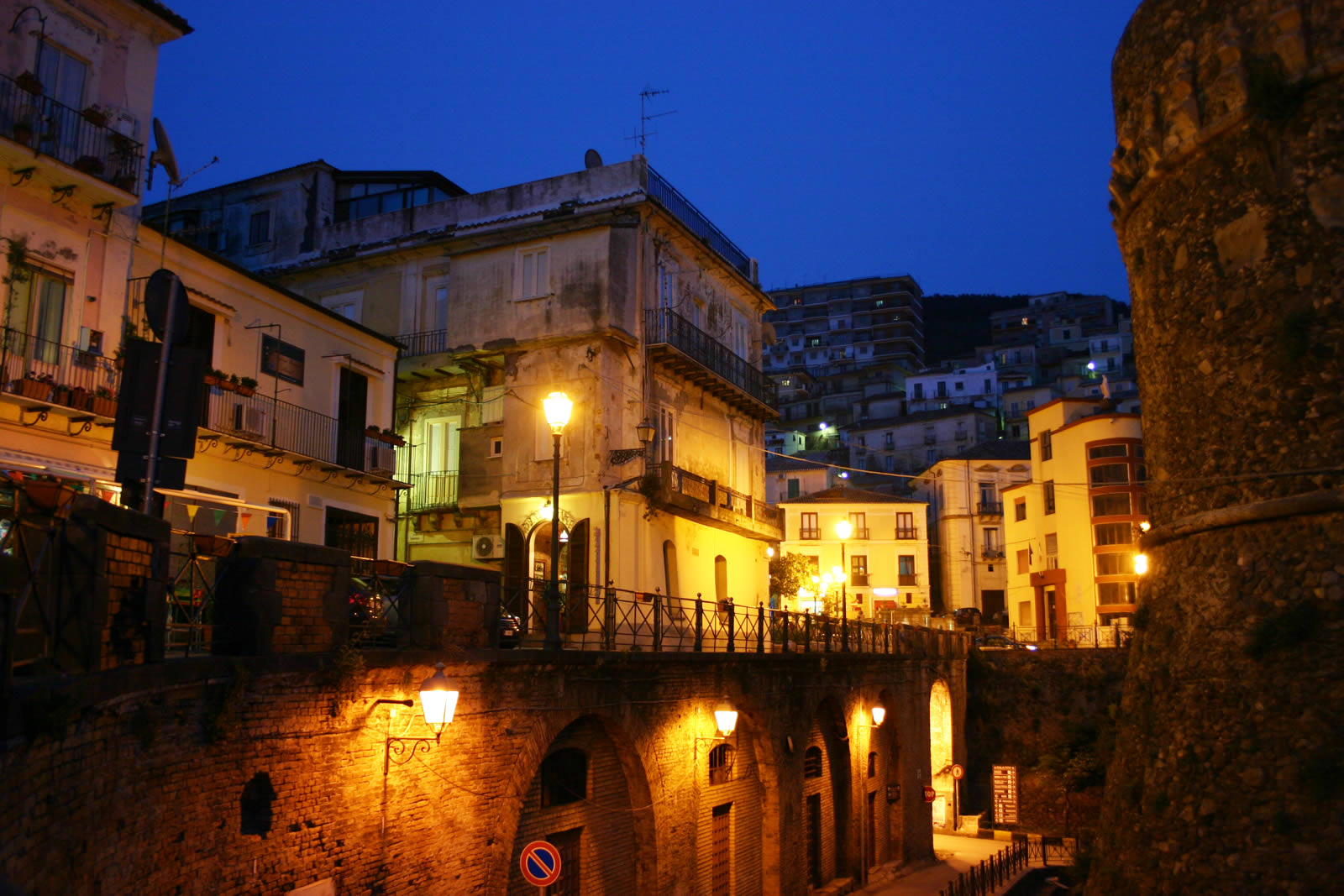
Gradually the built-up area grew and - for defense - was equipped with walls and towers on the sides and protected and fortified by a moat and a wash bridge. New churches and convents were built, flourishing trade in spices, silks, salted fish, oil, and wine began, and tuna fishing and the art of coral making increased. Pizzo underwent -over the centuries- Norman, Swabian, Angevin and Aragonese rule.
In the 2nd half of the 15th century, Ferdinand I° of Aragon had the Castle built there, in which Joachim Murat, King of Naples, was imprisoned and shot on October 13, 1815, then buried in the Chiesa Matrice di S.Giorgio Martire.
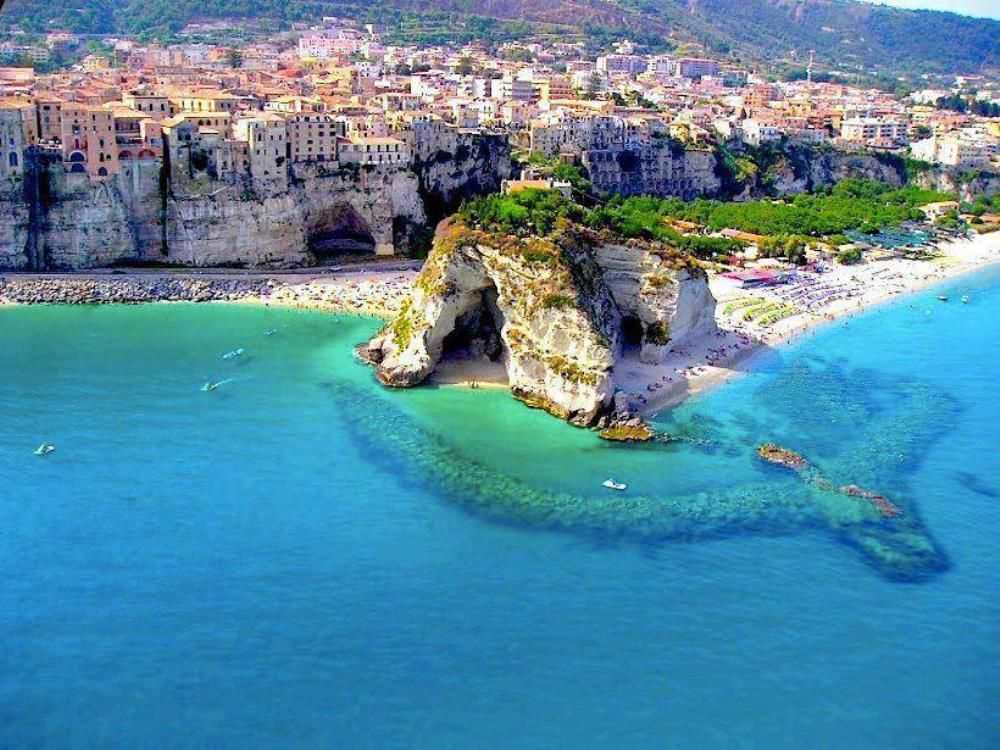
Today, Pizzo is a modern town, a resort renowned for its beaches, picturesque coves full of rocks, its clear sea, its blue sky, and its picturesque Old Town, with its sun-kissed houses, narrow streets and characteristic square with its overlook like the prow of a ship, lying like a waterfall on the tufa rock mirroring the sea.
Surrounded by fragrant arachnthus, which in spring spreads the heady scent of orange blossom in the air, it is known for the production of "zibibbo," a very sweet white grape of exceptional taste and flavor. Ancient tuna fishing has developed a thriving canning industry, which makes Pizzo's "tuna in oil" known and appreciated everywhere. The cuisine, based on local fish and traditional Calabrian dishes, is also excellent. Finally, famous are the homemade ice creams, which, harking back to a long tradition, with their exquisite taste and wide variety of choice, make it particularly "sweet" for visitors and tourists to stay and vacation in Pizzo.