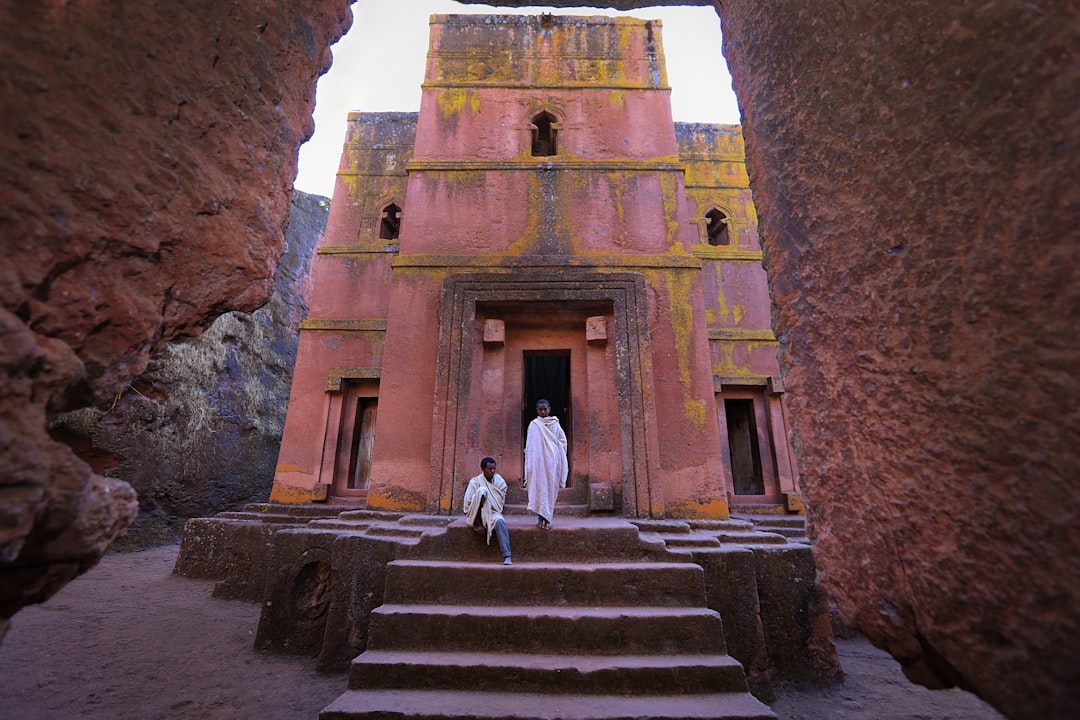

In the heart of Ethiopia, in Lalibela, a place of worship stands in its majestic solitude. Bete Giyorgis, one of the most fascinating rock-hewn churches in the world, is a hidden treasure that reveals the extraordinary ingenuity of Ethiopian ecclesiastical architecture. While tourists crowd around the more famous churches of the city, this gem offers a unique experience, away from the beaten paths, allowing visitors to immerse themselves in an atmosphere of spirituality and tranquility.
Bete Giyorgis, whose name means "The Church of Saint George," is dedicated to one of the most venerated saints of the Christian tradition. This church, carved from hard volcanic rock, is not only an exceptional example of monolithic architecture but also a symbol of the faith and determination of the Ethiopian people. Its cruciform shape stands out against the sky, a visual call that invites pilgrims to reflect and find inner peace.
A masterpiece of architecture
The church of Bete Giyorgis is a masterpiece of engineering and art. Dating back to the 12th century, it is one of the eleven rock-hewn churches of Lalibela, a UNESCO World Heritage site. Unlike other churches, often crowded with tourists, Bete Giyorgis manages to maintain an atmosphere of sacredness and isolation, making the visit an almost meditative experience.
Built entirely from a single block of rock, the church stands out for its extraordinary vertical architecture. The architects of the time created a work that not only respects Christian tradition but also integrates perfectly with the surrounding landscape. Its walls are adorned with frescoes, some of which date back centuries, depicting the life of Saint George and biblical stories. The intricate decorative details, the cross-shaped windows, and the pyramidal roof are just some of the elements that make Bete Giyorgis a wonder to explore.
A Spiritual Journey
Visiting Bete Giyorgis is not just a tourist experience, but a true spiritual journey. The church is a pilgrimage site for Orthodox believers, many of whom come from afar to pray and pay homage. Visitors can attend religious ceremonies, participate in liturgical chants, and immerse themselves in an atmosphere of deep devotion.
An intriguing element is the presence of monks who live within the complex, guardians of the tradition and history of this sacred place. Their presence brings a sense of authenticity and spirituality, and they are often willing to share stories and legends surrounding the church and its saints. Engage in a conversation with them and listen to their perspectives on faith, art, and daily life in this remote corner of Ethiopia.
An experience away from mass tourism
While other churches in Lalibela may be overcrowded and sometimes commercialized, Bete Giyorgis offers an oasis of tranquility. Here, visitors can lose themselves in the stunning architecture, spirituality, and the natural beauty that surrounds it. The rock sculptures and mountainous landscapes create a scenic backdrop that makes every moment spent here unforgettable.
This church, while being less known, is an invitation to discover another dimension of Ethiopia, a land of ancient traditions and cultures. Walking around Bete Giyorgis also offers the opportunity to explore the village of Lalibela and interact with the local population, savoring typical dishes and listening to the stories of the inhabitants who live in symbiosis with their religious and cultural history.
Conclusions: A Treasure to Discover
Bete Giyorgis represents a hidden treasure that deserves to be discovered. Its unique architecture, spiritual depth, and atmosphere of peace make it an unmissable destination for those seeking an authentic and meaningful experience. In a world where mass tourism risks overshadowing the true essence of places, Bete Giyorgis remains a beacon of authenticity and tradition.
Visiting it means immersing oneself in a context that goes beyond simple aesthetic beauty, rediscovering the deep connection between faith, history, and community. A visit to Bete Giyorgis is not just a geographical journey, but an inner path that enriches the soul and opens the heart to new experiences.