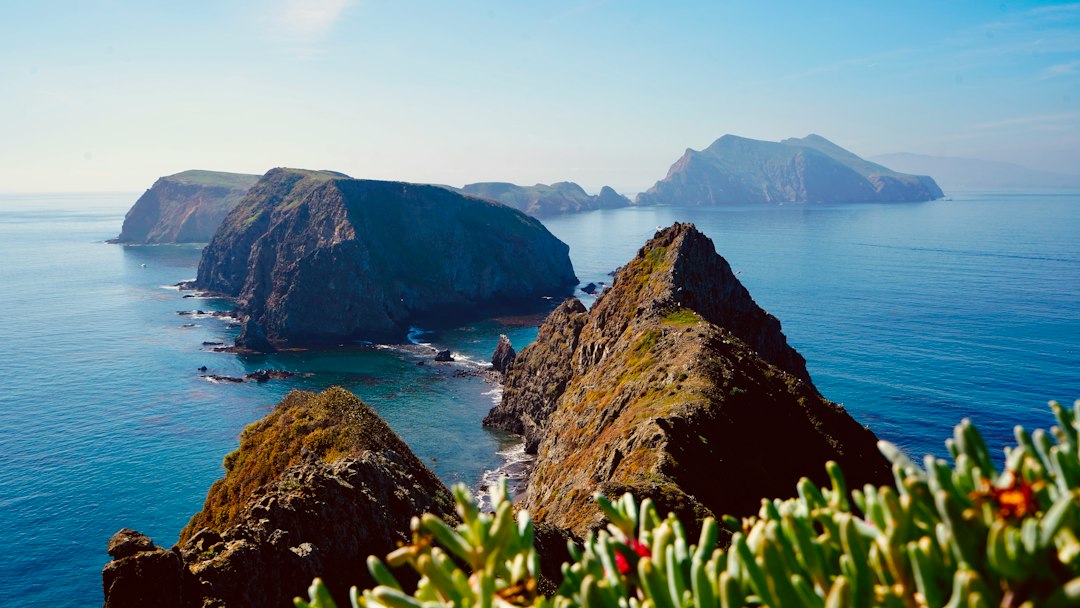

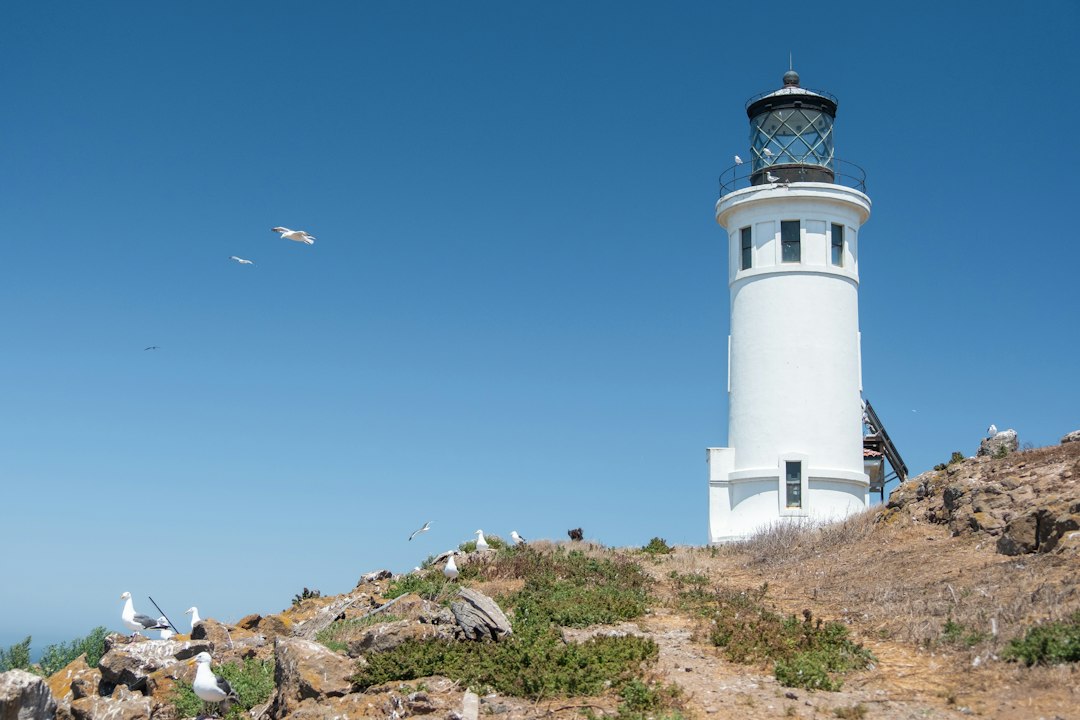
The sound of waves crashing against the basalt cliffs and the call of the seagulls gliding in the salty air: this is the welcome that the Anacapa Island Lighthouse offers to those arriving by boat through the Santa Barbara Channel. Built in 1932 and located about 19 kilometers from the coast of Ventura, California, this lighthouse is one of the most isolated along the entire west coast of the United States, accessible only by sea and protected within the Channel Islands National Park.
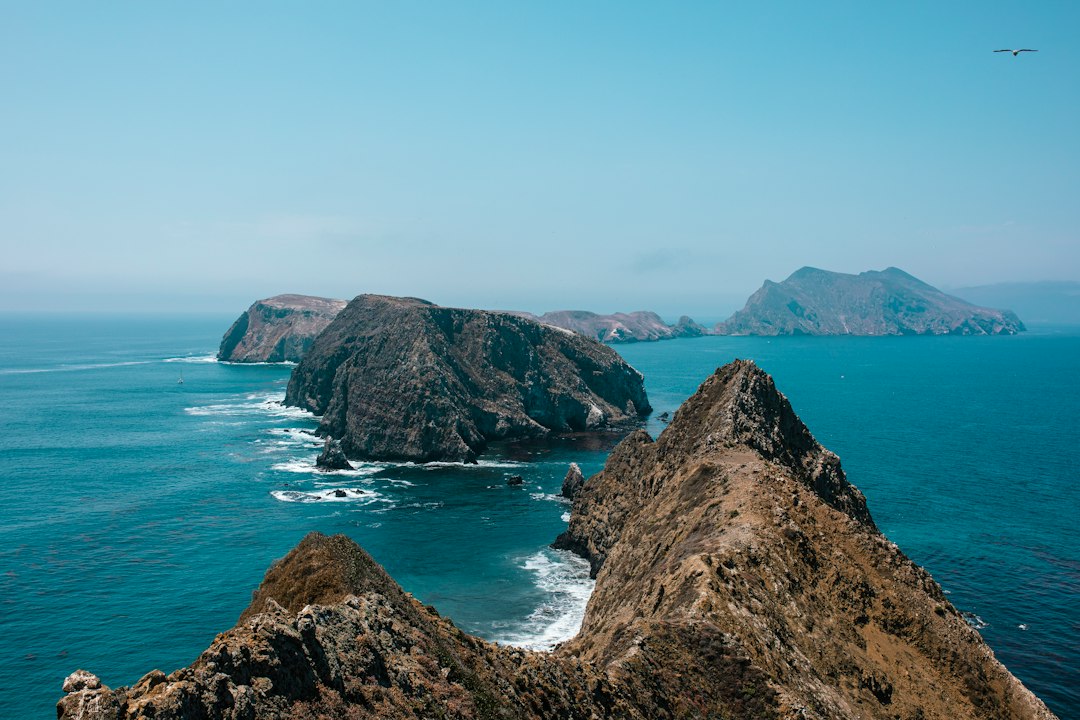
The white tower rises on the eastern tip of East Anacapa, the smallest and most accessible of the three islands that make up the Anacapa archipelago. With its 15 meters in height, the lighthouse is not imposing in size, but its location — atop cliffs that drop steeply over 40 meters into the Pacific — gives it a dramatic presence that is hard to forget. The original light was a fourth-order Fresnel lens system, now replaced by a modern automated apparatus.
History of a lighthouse built out of necessity

Before the construction of the lighthouse in 1932, the waters around Anacapa were sadly known for shipwrecks. The most famous wreck is that of the SS Winfield Scott, a steamship that ran aground on the rocks of the island in December 1853, fortunately without any casualties among the passengers. For decades, sailors navigated these dangerous waters without any bright reference point, until the American federal government decided to intervene.
The lighthouse station originally included not only the tower but also housing for the keepers and service facilities, some of which are still visible during the visit. The lighthouse was automated in 1966, ending the permanent presence of staff on the island. Today, the historic buildings are managed by the National Park Service, which has taken care of their restoration and preservation.

The wild nature surrounding the lighthouse
Anacapa is not just a lighthouse: it is an extraordinary marine ecosystem. Around the island's cliffs live numerous colonies of California sea lions (Zalophus californianus), which rest on the rocks and dive into the crystal-clear waters. The sound of their barks is a constant soundtrack during the visit. In the spring months, between April and June, the island becomes one of the most important nesting sites in the Pacific for the Western gull (Larus occidentalis): thousands of individuals occupy every available inch of the summit plateau.
The waters around the island are part of a marine reserve, and during the boat crossing, it is not uncommon to spot dolphins, brown pelicans, and, in the winter months, migrating gray whales. The vegetation is dominated by giant coreopsis (Leptosyne gigantea), a plant endemic to the Channel Islands that in spring covers the cliffs with intense yellow flowers, creating a spectacular color contrast with the blue of the Pacific.
How to visit the Anacapa Lighthouse
The only way to reach Anacapa Island is to board with Island Packers, the ferry company authorized by the National Park Service departing from the port of Ventura. The crossing takes about one hour and tickets cost approximately between 35 and 60 dollars per adult, depending on the type of trip (round trip on the same day or a longer excursion). It is strongly recommended to book well in advance, especially in the summer months and during the bird nesting season.
Once on the island, you go ashore via a staircase of 157 steps embedded in the cliff — a detail that visitors always remember, both on the way there and, with tired legs, on the way back. At the top, a plateau opens up offering a 360-degree view of the ocean and, on clear days, the coast of Ventura and Santa Barbara. The lighthouse itself is not open for interior visits, but its external structure and the old station buildings are freely observable. The best time to visit is from March to July, when nature is at its peak vitality and sea conditions are generally more favorable.
Practical tips for the visit
Bringing plenty of water is essential: there are no fountains or refreshment points on the island. The sun reflected from the ocean can be very intense even on cloudy days, so sunscreen and a hat are indispensable. During the nesting season, the National Park Service marks off certain areas to protect the seagull nests: it is important to strictly respect these boundaries, both for the protection of the animals and to avoid attacks from adult seagulls defending their young.
Those who suffer from seasickness should carefully consider the crossing, as the channel can be choppy even on nice days. Finally, bringing binoculars radically transforms the experience: sea lions on the rocks, whales in the distance, and the architectural details of the lighthouse appear in all their concreteness, making the visit even more memorable.