





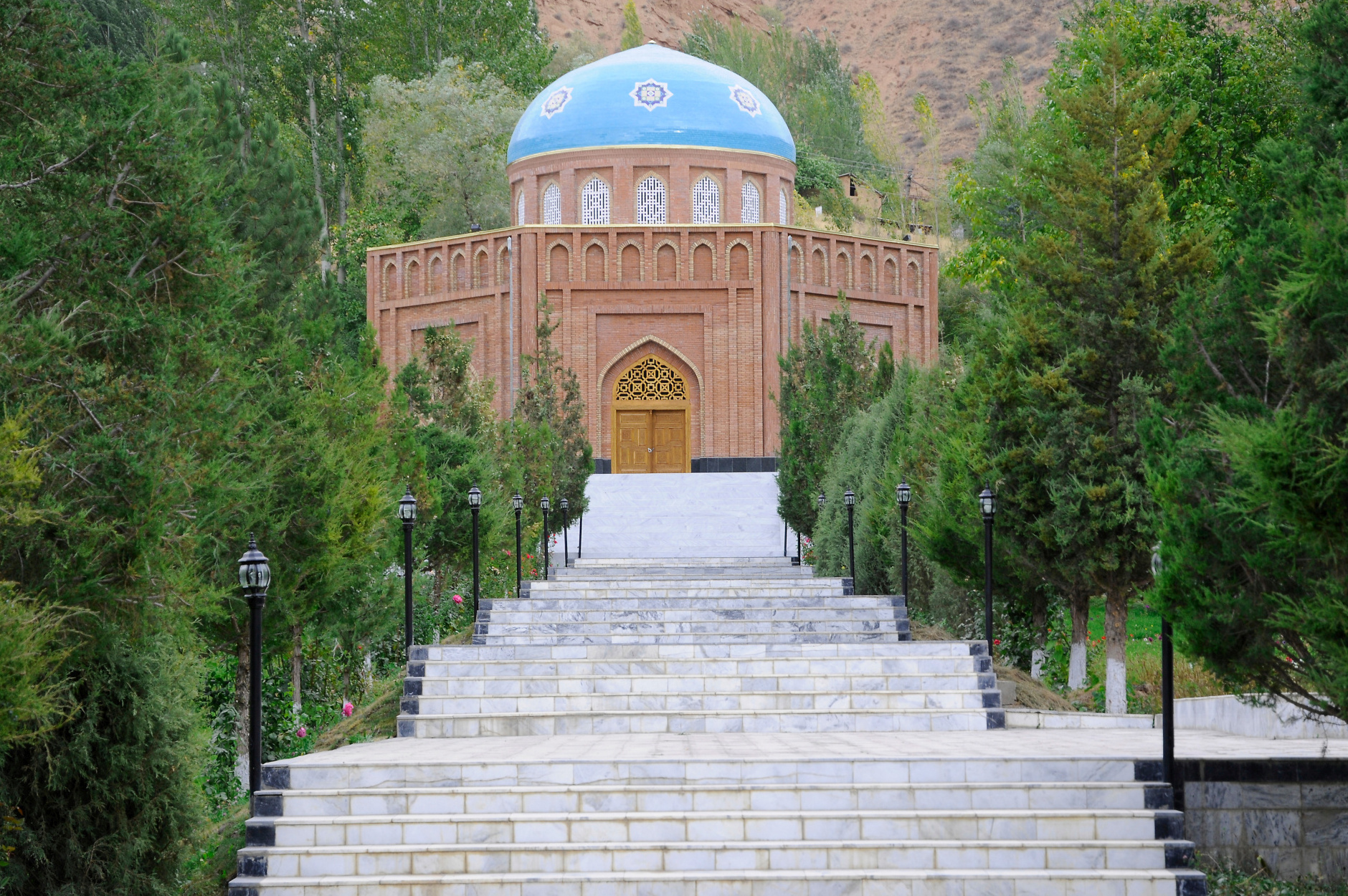
Nestled in the verdant valleys of Panjakent, Tajikistan, the mausoleum of Abu Abdulloh Rudaki stands as a tribute to one of the most significant figures in Persian literature. Born in the late 9th century during the flourishing Samanid dynasty, Rudaki is celebrated as the founder of classic Tajik poetry. His contributions to the literary world resonate through time, marking him as a beacon of cultural richness in Central Asia.
Rudaki’s life, though shrouded in mystery, is believed to have begun in the village of Panjrud, where he lived until his death in 941. His poetry, composed in Dari, the classical Persian language, included heartfelt odes and insightful verses that captured the essence of his time. His talent as a singer and musician gained him favor with Nasr II bin Ahmad Somoni, the Samanid ruler, who invited him to the vibrant city of Bukhara. Here, Rudaki flourished creatively, producing works that celebrated love, nature, and the human experience. Unfortunately, after he lost his royal patronage in 937, he faced a decline in fortune, spending his final years in obscurity, blind and impoverished.
The mausoleum erected in 1958 serves not only as a resting place but also as a cultural landmark, honoring Rudaki’s legacy. The structure is a blend of traditional Persian architectural elements and modern artistry, featuring intricate tilework and inscriptions that celebrate his poetic genius. Visitors are greeted by a serene ambiance, where the echoes of his verses seem to linger in the air, inviting reflection on the beauty of his work.
Local culture and traditions in the region are deeply influenced by Rudaki’s literary legacy. The people of Panjakent embrace their rich cultural heritage, often celebrating local poets and their contributions through various festivals. One such event is the Rudaki Poetry Festival, held annually to commemorate the poet’s birthday. This vibrant celebration brings together poets, musicians, and artists from across the country, showcasing the enduring importance of poetry in Tajik culture. Traditional Tajik music, often reminiscent of Rudaki’s own lyrical style, fills the atmosphere, creating a sense of unity and pride among the locals.
When it comes to gastronomy, Panjakent offers a delightful array of traditional Tajik cuisine that reflects the region's agricultural bounty. Dishes such as plov (a flavorful rice dish with meat and vegetables), samosas (savory pastries filled with meat or vegetables), and laghman (noodle soup with vegetables and meat) are staples. Visitors can also enjoy green tea, a significant part of Tajik hospitality, often served with sweet pastries. Sampling these dishes not only satisfies the palate but also provides a deeper insight into the local culture, as food plays a crucial role in social gatherings and celebrations.
Beyond the mausoleum and its literary significance, there are lesser-known curiosities that enrich the experience of visiting Panjakent. For instance, the nearby ruins of ancient Panjakent, a city that thrived in the 5th to 8th centuries, offer a glimpse into a once-thriving Silk Road hub. Archaeological excavations have unveiled fascinating frescoes, pottery, and artifacts that tell the stories of its cosmopolitan past. Moreover, the Zarafshan Valley, where Panjakent is located, is known for its stunning landscapes, including the breathtaking Fan Mountains, often overlooked by tourists focused solely on cultural sites.
For those considering a visit, the best time to explore Panjakent is during the spring (April to June) and autumn (September to October) months. The weather during these periods is mild and pleasant, perfect for wandering through the mausoleum and the surrounding landscapes. It’s advisable to wear comfortable shoes, as the area is rich in hiking opportunities. Don’t miss the chance to engage with local artisans and perhaps take home a piece of handcrafted pottery or fabric, as a way to remember your journey.
As you plan your visit to this poetic sanctuary, delve into the rich tapestry of history, art, and culture that defines Panjakent and its most revered poet. For a personalized itinerary that captures the essence of your journey, consider using the Secret World app for seamless planning.