





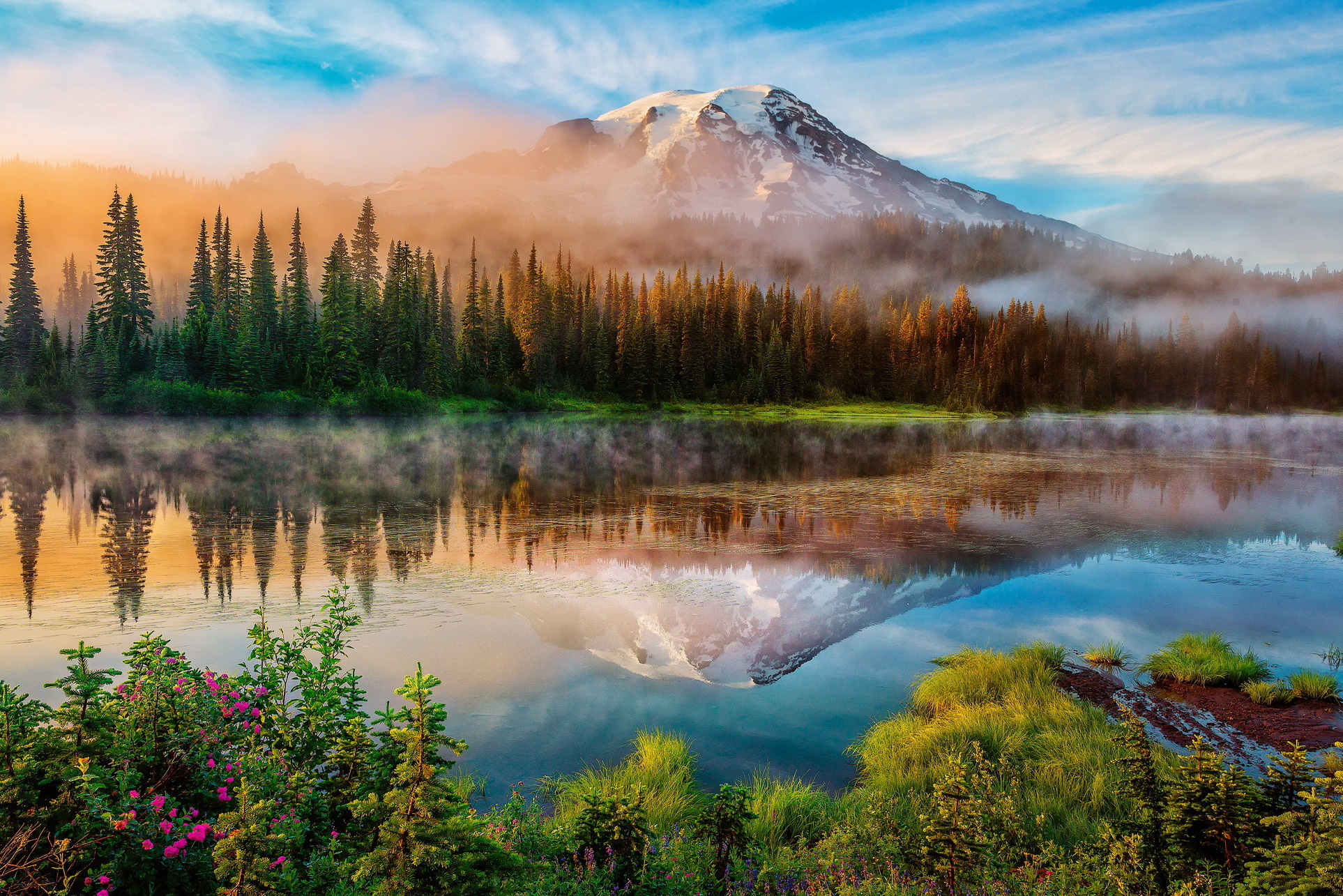
Nestled in the heart of the Pacific Northwest, Mount Rainier stands as a majestic sentinel, dominating the skyline with its snow-capped peak and lush forests. As the highest mountain in the Cascade Range of Washington State, this towering stratovolcano, which reaches an impressive 14,411 feet (4,392 meters), is not just a geological wonder but also a treasure trove of cultural and historical significance.
The history of Mount Rainier is as ancient as the land itself. Indigenous peoples, particularly the Puyallup and Nisqually tribes, have revered the mountain for thousands of years, referring to it as Tacoma or Tahoma, which some interpret as "Mother of Waters." These native communities have long regarded the mountain as a sacred place, integral to their spiritual and cultural identity. European exploration reached the area in the late 18th century when British captain George Vancouver named it after his friend, Rear Admiral Peter Rainier, in 1792. This marked the beginning of its recognition in the Western world, leading to its eventual designation as a national park in 1899, one of the earliest in the United States.
Architecturally, Mount Rainier National Park is noted for its rustic style, which harmoniously blends with its natural surroundings. The Paradise Inn, constructed in 1916, exemplifies this style with its use of native materials and craftsmanship that reflect the rugged beauty of the park. Inside, visitors can find intricate woodwork and stone fireplaces, creating a cozy retreat against the backdrop of Mount Rainier's dramatic landscapes. The park is also home to the Henry M. Jackson Visitor Center, a modern marvel with sweeping views of the mountain, offering educational exhibits that connect visitors to the natural and cultural history of the area.
Culturally, Mount Rainier is embedded in local traditions and stories. The mountain is a living canvas for artists who find inspiration in its serene beauty and dynamic moods. Festivals like the Rainier Mountain Festival celebrate the adventurous spirit of the region, drawing climbers and hikers from around the world. Local communities also host seasonal events, such as the Wildflower Festival, which showcases the stunning floral diversity that blooms each summer.
Gastronomy in the Mount Rainier area is a delightful exploration of Pacific Northwest flavors. Local cuisine heavily features fresh, sustainable ingredients from the surrounding forests and waterways. Dishes often incorporate wild mushrooms, berries, and locally-caught salmon. In nearby towns like Ashford and Enumclaw, visitors can enjoy hearty meals at rustic lodges, with menus boasting dishes like cedar-planked salmon and huckleberry pie. The region’s microbreweries and wineries offer a taste of local craft beverages, reflecting the artisanal spirit of the Pacific Northwest.
For those seeking lesser-known curiosities, Mount Rainier holds a few surprises. The mountain is home to 25 named glaciers, making it the most glaciated peak in the contiguous United States. Additionally, hidden within its vast wilderness are the Carbon River Rainforest and Mowich Lake, offering serene escapes from the more frequented trails. Wildlife enthusiasts might spot the elusive Cascade red fox, a rare subspecies found only in the alpine meadows of this region.
When planning a visit, timing is crucial to fully appreciate the splendor of Mount Rainier. The best months to visit are from July to September when the weather is mild, and the wildflowers are in full bloom. Early risers should aim for sunrise at Sunrise Point, the highest point in the park accessible by car, where the first light paints the mountain in hues of pink and gold. For hikers, the Wonderland Trail, a 93-mile loop around the mountain, offers an unparalleled adventure through diverse ecosystems.
Visitors should prepare for rapidly changing weather and bring layers, even in summer. For those venturing into higher altitudes, proper gear and awareness of the mountain’s volcanic history are essential. While Mount Rainier is currently dormant, it remains an active volcano, reminding all who visit of the powerful forces that shaped this iconic landscape.
In essence, Mount Rainier is more than just a mountain; it is a symbol of natural grandeur and cultural richness, offering an experience that resonates long after the journey ends.